

Low Speed Car Accidents in Northern Ireland: Can You Still Be Injured?


Car park accidents and other low speed collisions are often dismissed as minor incidents. Vehicles may be travelling slowly, damage may appear limited to a dented bumper or scratched door, and drivers frequently exchange details before continuing with their day.

However, across Belfast and the wider region of Northern Ireland, low speed impacts regularly result in genuine physical injury. Many individuals involved in these collisions initially assume the incident was insignificant, only to develop pain and stiffness later that day or in the days that follow.

Understanding how injuries can arise in low speed accidents – and the arguments often raised by insurers – can help individuals better understand their position following a collision.


Why Low Speed Does Not Mean Low Impact


The term low speed can be misleading. Even a vehicle travelling at 10 to 15 miles per hour generates significant force when it stops abruptly or strikes another vehicle.

In environments such as supermarket car parks, retail parks or multi storey parking facilities, drivers are frequently manoeuvring into tight spaces, reversing or turning sharply. Collisions often occur unexpectedly when a driver is not fully braced for impact.

Unlike motorway driving where attention is largely directed forward, car parks require constant awareness of vehicles approaching from multiple directions, pedestrians walking between cars and shopping trolleys moving unpredictably.

When a collision occurs in these circumstances, the sudden jolt can cause rapid movement of the head, neck and torso. This movement can place strain on muscles and ligaments even where the visible vehicle damage appears minimal.

Rear end bumps are particularly common in car parks. A driver may reverse without noticing another vehicle behind them, or may roll forward unexpectedly while distracted. The occupants of a stationary vehicle can experience sudden forward and backward motion similar to that seen in higher speed rear end collisions.


Can You Get Whiplash at Low Speed?


It is accepted that a range of injuries may arise following low speed impacts.

Whiplash injuries are among the most frequently reported. The neck contains delicate muscles and ligaments which can be strained when the head moves suddenly backwards and forwards. Symptoms often include stiffness, headaches and reduced range of movement.

Lower back discomfort is also common. When a stationary vehicle is struck, the spine may absorb a compressive force which can lead to muscle spasm or ongoing soreness.

Shoulder injuries may occur where the seatbelt tightens abruptly during the collision. Some individuals also report headaches or mild concussion symptoms where the head moves suddenly even if it does not strike any surface.

In many cases symptoms do not develop immediately. Adrenaline released during the accident can mask discomfort, with stiffness and pain developing later that evening or the following morning.


Why Car Park Accidents Are So Common in Belfast


Busy retail parks and city centre parking facilities in Belfast experience heavy traffic throughout the week. At peak times – particularly weekends and holiday periods – congestion can increase significantly.

Drivers may feel pressure to secure a parking space quickly, leading to rushed manoeuvres or reduced attention to surrounding vehicles.

Multi storey car parks present additional challenges. Tight corners, structural pillars and sloped ramps can limit visibility and reduce reaction time. In winter months poor lighting combined with wet surfaces can further increase risk.

Distraction also plays a role. Drivers may focus primarily on finding a space rather than monitoring surrounding traffic. Mobile phones, navigation systems and in car conversations can all reduce situational awareness.

Poor road conditions may also contribute to unexpected manoeuvres. Drivers entering or leaving car parks sometimes swerve to avoid potholes or uneven road surfaces, increasing the likelihood of minor collisions. Concerns about deteriorating road conditions in Northern Ireland have been widely reported in recent years, including coverage by the BBC highlighting the scale of the pothole problem across the region.


How Insurers in NI May Approach Low Speed Collision Claims


Where injury claims arise from low speed collisions, the circumstances of the accident are often examined carefully by insurers and their legal representatives. While genuine injuries can and do occur in low speed impacts, it is also recognised within the legal system that some claims may be exaggerated or unsupported by the surrounding evidence.

At Lacey Solicitors, we are known as road traffic accident specialists and act in a range of personal injury matters.  Our work may involve representing either injured individual or insurers depending on the circumstances of the case. Where we are instructed by insurers and their policyholder describes an accident occurring at relatively low speeds, it is common for the claim to be scrutinised more closely to ensure that the evidence supports the injury being alleged.

We previously wrote about Defending Low Velocity Claims.

In such situations, any defence lawyer will consider what is sometimes referred to as a causation defence. This involves examining the mechanics of the collision and assessing whether the circumstances described are capable of causing the injury being claimed.

Courts have acknowledged that exaggerated or fabricated claims can occur. Judges will often accept, that the problem of exaggerated whiplash claims is well recognised and that courts may approach such claims with an appropriate degree of caution.

When claims arise in low speed scenarios, insurers and their legal advisers may examine factors such as:

  • The estimated speed and force of the impact
  • The extent of visible vehicle damage
  • The likely movement of the occupants during the collision
  • Whether that movement could realistically result in the injuries alleged
  • The duration and progression of symptoms being reported
  • The Plaintiff’s medical history and overall credibility

In addition, attention may be given to what steps were taken following the accident. For example, insurers may consider whether medical treatment was sought promptly or whether there is any previous accident history which may be relevant.

From both the plaintiff and insurer perspective, the key issue ultimately remains the same: whether the available evidence demonstrates, on the balance of probabilities, that the accident caused the injury being claimed.


Why Minimal Vehicle Damage Does Not Mean No Injury


Although insurers often raise these arguments, vehicle damage and human injury do not always correlate directly.

Modern vehicles are designed to absorb and disperse energy during collisions. Components such as bumpers and crumple zones can reduce visible structural damage while still transmitting force through the vehicle.

The human body, particularly the neck and spine, may still experience sudden movement even where the car itself appears largely undamaged.

Medical professionals regularly confirm that soft tissue injuries can arise without dramatic vehicle damage. The severity of injury can also depend on factors such as seating position, headrest alignment, seatbelt tension and whether the occupant anticipated the collision.

Every accident is different. What appears to be a minor impact in mechanical terms can still result in genuine physical injury.


The Importance of Medical Evidence


In any personal injury claim the burden of proof rests with the Plaintiff.

Courts will usually expect credible medical evidence together with a consistent and reliable account of how the accident occurred and how symptoms developed.

Where an individual provides a clear history supported by medical assessment, genuine injuries arising from low speed collisions are regularly recognised.

Conversely, where evidence is inconsistent or unsupported, claims may fail. This is why seeking medical attention after a collision and obtaining proper legal advice can be important.


Taking Low Speed Accidents Seriously


Car park collisions and other low speed accidents may appear routine, but they can still have real consequences.

Recognising that injury is possible even in modest impact scenarios helps individuals respond appropriately and seek reassurance where necessary.

If you have been involved in a low speed car accident and are unsure about your position, the personal injury solicitors at Lacey Solicitors have experience assisting clients across Northern Ireland in understanding their options following road traffic accidents.
Motorbike Accidents in NI: The Risks Riders Know Too Well

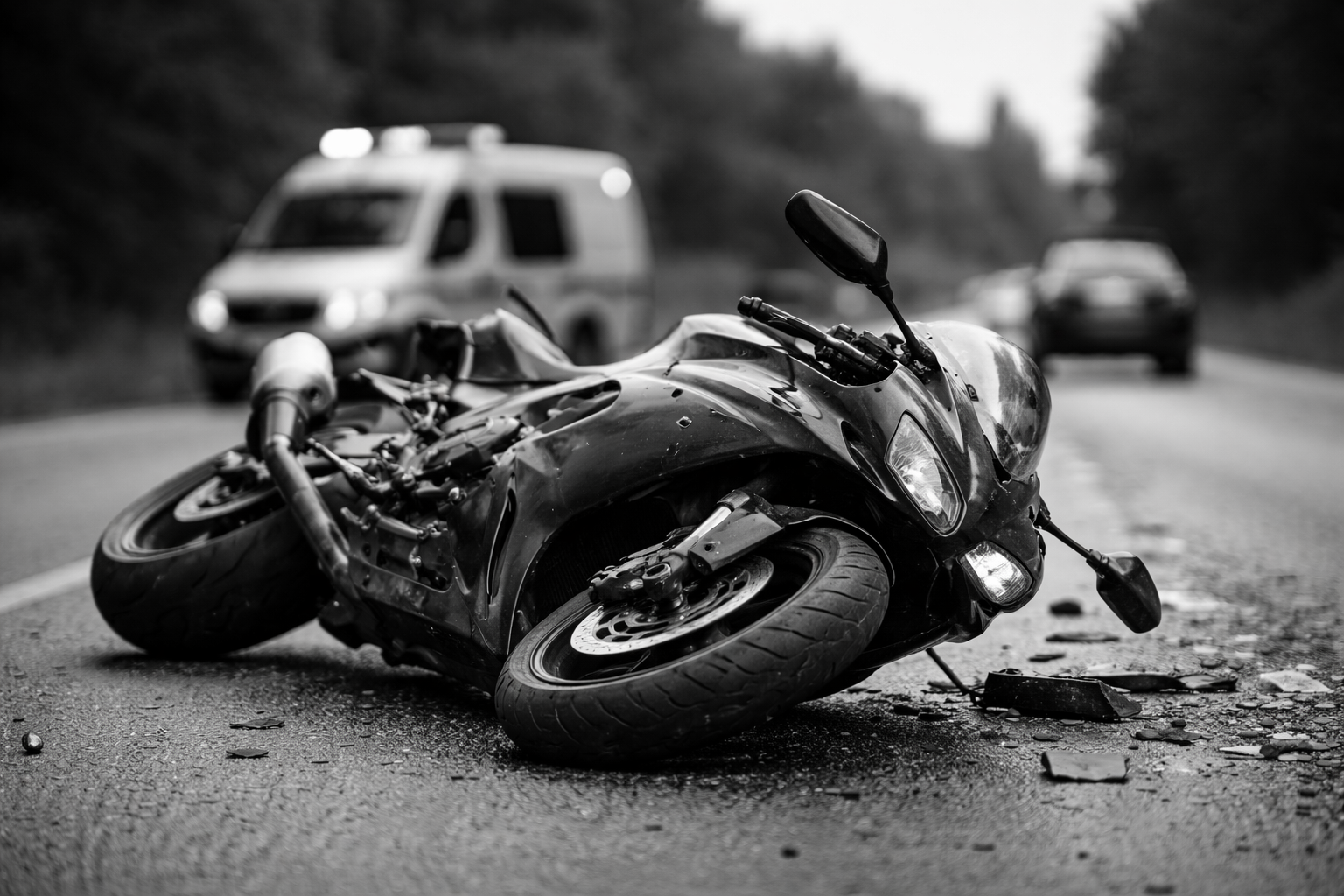
Motorcyclists across Northern Ireland understand that riding comes with a different level of exposure on the road. While bikes offer freedom, efficiency and an unmatched sense of control, they also leave riders far more vulnerable in the event of a collision. Unlike drivers in cars, motorcyclists do not have the protection of a steel frame, airbags or reinforced panels. When an accident happens, even at moderate speeds, the consequences can be serious.

From rural routes in County Down to busy commuter traffic in Belfast, motorbike accidents remain a regular feature of road traffic accidents throughout NI. Many of these collisions are not caused by reckless riding. Instead, they often stem from visibility issues, misjudged turns or drivers simply failing to anticipate a motorcycle’s presence.


Why Motorcyclists Face Greater Risk on Northern Ireland Roads


The vulnerability of motorcyclists is the most obvious risk factor. A rider’s body absorbs far more of the impact during a collision than someone seated inside a vehicle. Even with protective clothing and a helmet, the absence of structural shielding increases the likelihood of injury.

Visibility is another key issue. Motorcycles are smaller and can be harder to detect in mirrors, particularly at junctions or roundabouts. Drivers turning right across traffic frequently misjudge the speed or distance of an approaching bike. In many reported cases, the driver later explains that they simply did not see the motorcyclist.

Road surface conditions across Northern Ireland also play a role. Uneven rural roads, loose gravel, potholes and poor drainage can destabilise a motorcycle more easily than a car. During wet or icy conditions, the reduced contact area between tyre and road increases the risk of skidding.


Common Types of Motorbike Accidents in NI


Several recurring scenarios appear in motorbike accident cases across Belfast and the wider region.

Junction collisions are particularly common. A car emerging from a side road may miscalculate the motorcyclist’s approach speed. These incidents often result in side impacts, throwing the rider from the bike.

Overtaking manoeuvres on rural roads present another risk. Narrow carriageways and bends with limited visibility can lead to head on or side swipe collisions if either party misjudges timing.

Rear end impacts also occur, especially in urban stop start traffic. While a low speed rear collision between two cars may result in minor damage, the same impact against a motorcycle can unseat the rider and lead to more significant injury.

Lane filtering, although lawful when done carefully, sometimes contributes to disputes. Drivers may change lanes without checking mirrors thoroughly, leading to contact with a passing motorcycle.


Injuries Frequently Seen in Motorbike Collisions


Because riders lack physical protection, injuries can range from soft tissue damage to more serious trauma. Fractures to wrists, arms and legs are common where a rider instinctively braces during a fall. Shoulder injuries and collarbone fractures also occur frequently.

Head injuries remain a significant concern, even where helmets are worn. While helmets provide vital protection, they cannot eliminate all risk. Concussion and other head trauma may still develop, sometimes with symptoms appearing hours after the accident.

Spinal injuries and back pain are also reported regularly. The force of being thrown from a bike or landing awkwardly can strain muscles and ligaments or cause more complex injury.

Beyond physical harm, psychological effects are widely experienced. Riders often describe a loss of confidence when returning to the road. Even experienced motorcyclists may feel heightened anxiety at junctions or in heavy traffic following an accident.


The Impact of Rural Roads in NI


Northern Ireland’s rural landscape is one of the attractions of motorcycling, yet it also presents distinct hazards. Twisting country roads, variable surfaces and limited lighting can create challenging conditions, particularly during winter months.

High hedgerows and tight bends reduce forward visibility. Agricultural vehicles and livestock occasionally appear unexpectedly. When combined with higher rural speed limits, these factors increase the severity of collisions.

Weather adds another dimension. Rainfall is frequent, and standing water can collect in uneven sections of road. Strong crosswinds may also affect rider stability, particularly on exposed routes.


When Drivers Fail to Anticipate Motorcyclists


A recurring theme in many cases is driver inattention. Motorists often focus primarily on other cars and larger vehicles. A motorcycle’s smaller profile can mean it is overlooked during mirror checks or while scanning oncoming traffic.

At roundabouts and junctions in Belfast, split second decisions are made constantly. When a driver misjudges a rider’s position or speed, the margin for correction is slim. These accidents are rarely deliberate. More often, they stem from human error and a brief lapse in awareness.

Many riders take additional precautions such as wearing high visibility clothing or using daytime running lights. Even so, accidents still occur, reinforcing the inherent vulnerability of motorcyclists.


What Happens After a Motorbike Accident


Following a motorbike accident, medical attention is often required, even where injuries seem manageable at first. Adrenaline can mask pain in the immediate aftermath. Riders frequently report stiffness or discomfort developing later that day or in the days following.

Insurance investigations may involve discussions about speed, positioning and protective gear. In some cases, liability is disputed where each party provides a different account of events.

Individuals often choose to speak with professionals experienced in handling motorcycle related claims to better understand how similar situations are typically approached. Our Road Traffic Accident team regularly assist riders throughout Northern Ireland who are navigating the aftermath of a collision.


Returning to the Road


For many riders, the psychological hurdle of returning to motorcycling can be as challenging as physical recovery. Confidence may take time to rebuild. Some choose to undergo additional training or gradually reintroduce themselves to familiar routes before attempting longer journeys.

Motorcycling remains an important part of life for many people across NI. Understanding the common causes and consequences of accidents can help riders remain vigilant and informed.

If you have been involved in a motorbike accident and would like to discuss your situation, you can reach out through our contact page to speak with a member of our team. We provide clear and considered guidance for individuals dealing with road traffic accidents across Northern Ireland.


Scarring, Burns and Dermatology Injuries After Road Traffic Accidents in Northern Ireland

Skin injuries are often underestimated after a road traffic accident in Northern Ireland.

Many people initially focus on the more obvious consequences of a collision such as whiplash, back pain or general soreness. Only later do they realise that an injury to the skin can have a deeper impact than expected. Scarring, burns and other dermatology related problems can affect movement, confidence and emotional wellbeing for far longer than many anticipate. These injuries can feel very personal, particularly when they appear on visible areas such as the hands, face or arms. People regularly express surprise at how much a skin injury influences everyday life long after the accident itself.

In Northern Ireland, a wide range of accident types can lead to dermatology injuries. Rear end incidents, side impacts, collisions at junctions and even low speed bumps can result in abrasions, burns or lacerations. The skin reacts to trauma in ways that are not always immediately obvious. Some injuries remain painful for weeks. Others heal physically but leave lasting marks that affect confidence. Understanding how these injuries arise and how they affect people can help individuals make sense of what they are experiencing after an accident.


How Dermatology Injuries Happen During an Accident


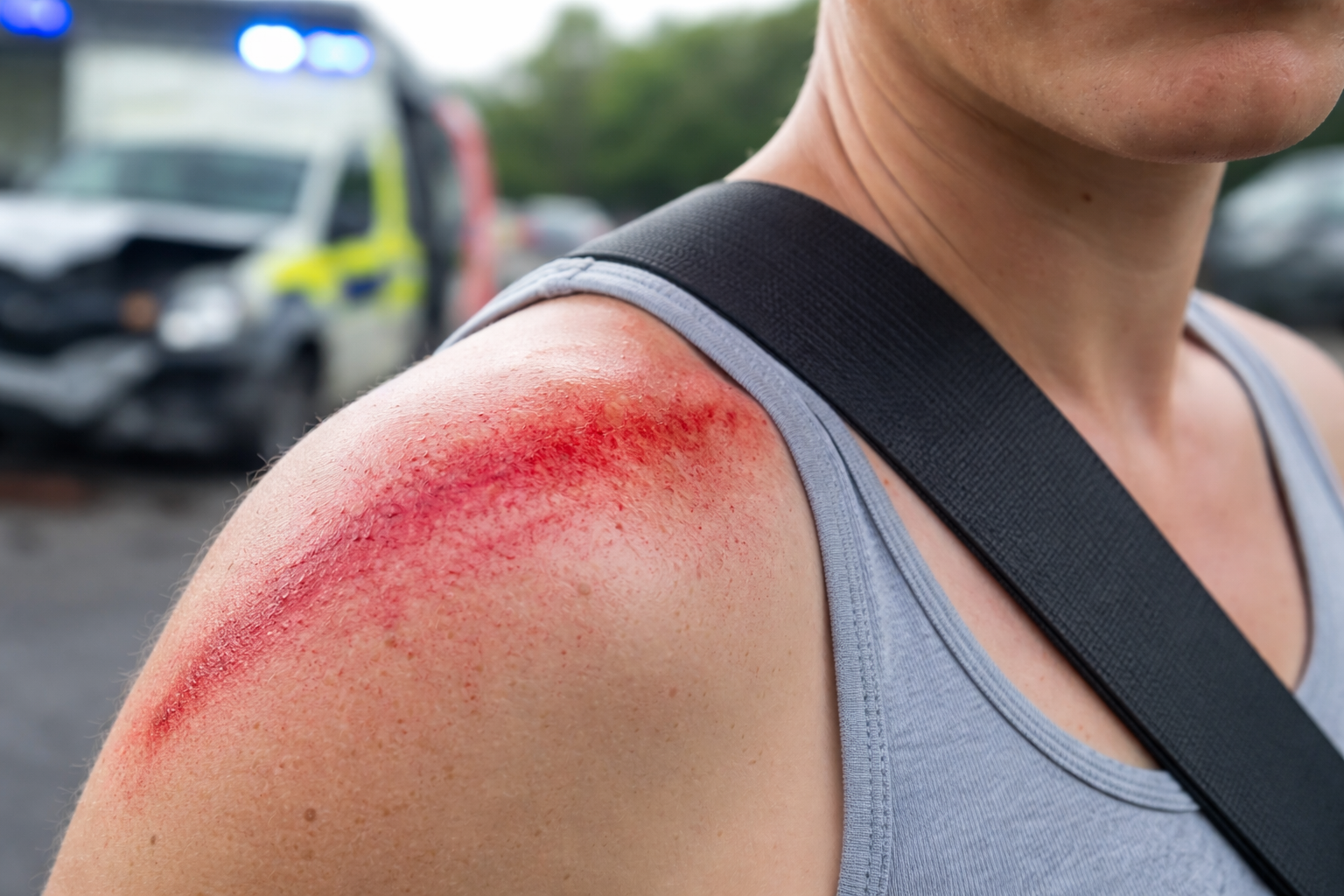
The skin can be damaged in several ways during a collision. Airbags deploy rapidly with considerable heat, which can cause irritation or superficial burns. Seatbelts tighten abruptly and can create friction injuries across the chest, neck or shoulder. Broken glass may cause small but significant cuts during a side impact or T bone collision. Even contact with interior surfaces of the vehicle can leave marks that take time to heal.

Some injuries do not seem serious at the time but grow more noticeable as the days pass. People often mention that swelling, discolouration or raised scarring appeared only after the initial shock faded. This is completely normal and something many individuals across Northern Ireland experience following a road traffic accident.


Injuries That Commonly Affect the Skin


Lacerations are among the most frequent injuries, especially when glass is involved. These wounds may heal quickly but can leave visible scars that last for years. Seatbelt friction burns can create patches of tender, reddened skin that remain sore for an extended period. Airbag burns may appear as dry or irritated patches that require ongoing care. Some people also experience deeper tissue bruising that changes colour before slowly fading.

Dermatology injuries vary widely in severity. Minor cuts might heal with little difficulty. More significant wounds can result in permanent marks or areas of sensitivity. People often explain how they were surprised by the emotional response these injuries created, particularly when they affected their appearance.


Psoriasis and Other Conditions Triggered by Trauma


A lesser known but increasingly discussed issue is the triggering or worsening of psoriasis and other skin conditions after a collision. Many individuals in Northern Ireland who have never experienced a flare up suddenly develop irritated or inflamed patches of skin in the weeks following an accident. Others with a pre existing condition notice a sudden increase in symptoms.

This response can occur for several reasons. Physical trauma to the skin may cause new lesions to appear. Emotional stress following the incident can aggravate underlying conditions. Changes in routine, sleep patterns or medication can also influence how the skin reacts. These flare ups often cause embarrassment, discomfort and frustration, especially when they appear in prominent areas.


The Emotional and Social Impact of Skin Injuries


Skin injuries often carry emotional weight that can be deeper than the physical discomfort itself. People regularly describe feeling self conscious about visible scarring, even when others do not notice it. A small scar on the hand, a mark along the jawline or a patch of discoloured skin on the arm can influence how a person feels in social or professional settings.

Some individuals begin altering how they dress. Others avoid certain activities or feel anxious in situations where the injury might be noticeable. These feelings are very common and are frequently mentioned when people discuss their experiences after a road traffic accident in Belfast or other parts of Northern Ireland.


How Dermatology Injuries Affect Daily Life


Daily routines often become more difficult after a skin injury. Clothing may rub against tender areas, making movement uncomfortable. Heat, cold or moisture can irritate healing skin. Those with extensive bruising or burns may struggle with sleep, especially when lying on the injured side. People with psoriasis flare ups often describe the discomfort of itching or tightness that interrupts daily productivity.

These challenges are not just physical. They often influence confidence and mood. Many individuals explain that their injury affects them more than they expected, particularly when it takes longer to heal than anticipated.


How Northern Ireland Road Conditions Contribute to These Injuries


Road conditions across Northern Ireland influence the types of injuries people experience. Narrow rural routes can lead to side impacts where broken glass creates lacerations. Busy Belfast traffic often results in rapid airbag deployment, which increases the chance of burns or chemical irritation. Sudden braking in wet or icy weather can cause the body to move sharply within the vehicle, creating abrasions or friction injuries.

These factors help explain why dermatology injuries appear in so many different kinds of collisions.


Speaking with a Solicitor About Skin Injuries after a Road Traffic Accident


People often choose to speak with a solicitor after experiencing scarring, burns or dermatology related injuries because they want clarity about what others in similar situations usually do. These discussions are not about receiving legal advice. They are about understanding how to document the injury, what information may be useful and what steps people commonly take during their recovery.

Many individuals find it reassuring to speak with a team familiar with the emotional and physical impact of these injuries. At Lacey Solicitors our personal injury team regularly supports people coping with the effects of dermatology injuries following a road traffic accident. You can explore our Road Traffic Accident services through our website for additional information and guidance.


Taking Steps Toward Recovery


Skin injuries often improve over time, but the recovery process can be gradual. Scars may fade slowly. Burns can remain sensitive for months. Skin conditions triggered by stress may come and go unpredictably. These fluctuations are normal and do not mean the injury is worsening.

People often find comfort in knowing that others have shared similar experiences. If you want to discuss your situation or understand what people commonly do after sustaining a skin injury, you can reach out through our contact page where our team is ready to offer calm and supportive guidance.