
A Guide to Choosing the Best Solicitors in Belfast and Northern Ireland

Navigating legal issues can be challenging. Whether you need assistance with personal injury claims, insurance law, or business disputes, finding the right solicitor in Belfast is essential. Lacey Solicitors, a leading law firm in Northern Ireland, provides expert legal guidance and representation tailored to your needs.

This guide will help you understand how to choose the right Belfast solicitor, what to look for, and the specialist services offered by Lacey Solicitors.


Understanding the Legal Landscape in Belfast and Northern Ireland


Belfast is home to a number of outstanding law firms offering their own range of legal specialisms.

From family law and personal injury claims to corporate law and property transactions, it is important to choose a solicitor in Belfast with expertise in your specific area of law.

By understanding the local legal landscape, you can select a firm that is not only experienced but also highly knowledgeable about Northern Ireland law.


What to Consider When Choosing A Solicitor In Belfast


When searching for a Belfast solicitor, there are key factors to consider:

Experience and Expertise

A solicitor with experience in your specific legal area can make a significant difference. Look for firms with a proven track record in handling cases similar to yours.

Lacey Solicitors, founded in 2005 by Terence Lacey, has nearly 20 years of experience in insurance law and personal injury claims across the entire Island of Ireland.

Reputation and Reviews

Check online reviews and client testimonials to understand a firm’s reputation. Highly rated Belfast solicitors often have consistent 5-star reviews for professionalism and results. Lacey Solicitors is proud and thankful for its overwhelmingly positive client feedback on Google.  

Accessibility and Communication

Clear communication is crucial in legal matters. Choose a solicitor in Belfast who is responsive, keeps you informed, and provides guidance throughout your case.

Cost and Transparency

Legal fees can vary. Look for firms that provide clear, upfront information about pricing, potential extra costs, and flexible payment options. Transparent billing ensures there are no surprises.


Types of Legal Services Available with Lacey Solicitors Belfast


Lacey Solicitors offers a comprehensive range of services to individuals and insurance companies across Northern Ireland. Their Belfast solicitors specialise in:


Why Choose Lacey Solicitors in Belfast?


  • Nearly 20 years of experience in personal injury and insurance law

  • Highly rated Belfast solicitors with excellent client reviews

  • Comprehensive insurance and injury legal services tailored to individual and corporate clients

  • Transparent pricing and responsive communication

  • Expertise in complex claims, including catastrophic injuries and industrial disease


Contact Lacey Solicitors Belfast Today


For trusted, professional legal advice, contact Lacey Solicitors in Belfast. Speak to one of our experienced Belfast solicitors today and ensure your legal matters are handled efficiently and effectively.

Contact the team at Lacey Solicitors here to discuss your legal needs.
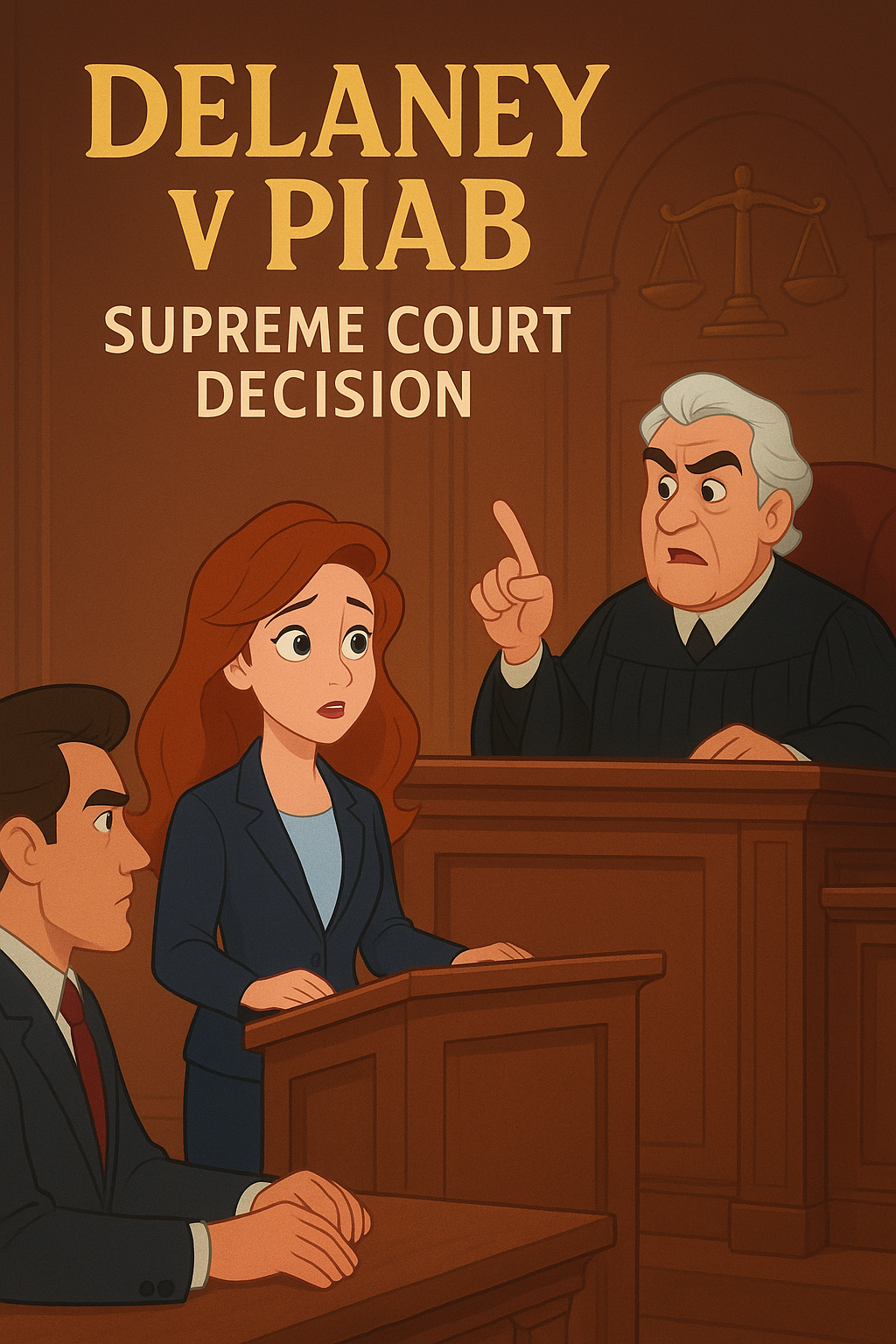
Supreme Court Upholds Personal Injuries Guidelines in Delaney v PIAB in ‘Landmark’ Ruling

Introduction


Following on from our previous briefing, the Supreme Court on 9th April 2024 delivered its much-anticipated decision in Delaney v PIAB, The Judicial Council of Ireland and The Attorney General. The ruling confirms that the Personal Injuries Guidelines remain valid and legally binding, even though part of the Judicial Council Act 2019 was struck down.

This judgment provides certainty for the future of personal injury compensation in Ireland and clarifies the ongoing role of PIAB.


Landmark decision on case ‘of systemic importance’


The Court ruled that Brigid Delaney had lost her appeal. The Judicial Council-approved guidelines — which significantly reduced awards for minor injuries — remain binding, and any changes to them must now come through legislation.

A seven-judge panel delivered five separate judgments, with two further judges concurring.

Presiding, Mr Justice Peter Charleton emphasised that the case would affect thousands of future personal-injury claims and “multiples of that” into the future. He described the matter as being “of systemic importance.”


Background to the Case


  • On 12 April 2019, Mrs Delaney fell on a footpath in Dungarvan, suffering a minor ankle fracture.

  • Under the Book of Quantum, her damages were estimated at €18,000–€34,000.

  • PIAB instead applied the new Personal Injuries Guidelines, awarding €3,000.

  • She challenged this in the High Court, arguing that the Guidelines were unconstitutional.


Issues Raised


The applicant claimed that:

  1. Section 7(2)(g) of the Judicial Council Act 2019 was an impermissible delegation of legislative power.

  2. The Act infringed judicial independence under Article 35.2.

  3. The Guidelines were applied retrospectively, depriving her of vested rights.

  4. Reduced awards infringed her rights to property, bodily integrity, and equality.


High Court Decision


Mr Justice Charles Meenan rejected the challenge, holding that:

  • Section 90 of the 2019 Act set out adequate principles and policies.

  • The Judicial Council properly followed these when drafting the Guidelines.

  • Courts retained discretion to depart from the Guidelines, preserving independence.

  • PIAB acted lawfully under the PIAB Act 2003.


Supreme Court Decision


The Supreme Court took a narrower approach:

  • By a 5–2 majority, it held that Section 7(2)(g) of the 2019 Act was unconstitutional as an impermissible delegation of legislative power.

  • However, this flaw was cured by the Family Leave and Miscellaneous Provisions Act 2021, which formally enacted the Guidelines into law.

  • As a result, the Guidelines survived the challenge and remain binding.

  • PIAB’s award of €3,000 was therefore lawful.


Practical Consequences


  • Binding effect: The Guidelines are legally binding, with departures allowed only in exceptional circumstances where no reasonable proportion exists.

  • Legislation required: Any future changes must be passed by the Oireachtas.

  • Reviews: A statutory review every three years is required, though amendments may now be delayed.


Conclusion


The Delaney v PIAB Supreme Court decision confirms that the Personal Injuries Guidelines remain the law in Ireland. Despite striking down part of the Judicial Council Act 2019, the Supreme Court has provided certainty to claimants, defendants, insurers, and practitioners that the Guidelines will continue to govern the assessment of general damages.

Supreme Court Decision in Delaney v PIAB Case Eagerly Anticipated

Introduction


The forthcoming Supreme Court ruling in Delaney v PIAB, The Judicial Council of Ireland and The Attorney General is one of the most closely watched personal injury cases in Ireland. The decision, expected on 9th April, could have far-reaching implications for the Personal Injuries Guidelines, the role of PIAB, and how courts assess general damages in compensation claims.


Background to the Delaney Case


On 12th April 2019, Mrs Delaney suffered a fall on a public footpath, grazing her knee and sustaining a minor ankle fracture (an undisplaced fracture of the right lateral malleolus).

  • She submitted her claim to PIAB, naming Waterford City and County Council as the respondent.
  • Under the Book of Quantum, she was advised that general damages would likely fall between €18,000 and €34,000.
  • However, PIAB assessed her damages at just €3,000, applying the new Personal Injuries Guidelines introduced in 2021.

This stark difference in award values led Mrs Delaney to initiate Judicial Review proceedings, arguing that PIAB had acted unlawfully by applying the Guidelines instead of the Book of Quantum.


Grounds of the Judicial Review


The applicant challenged the validity of the Guidelines on four main constitutional grounds:

  1. Unconstitutional Delegation of Power – The Judicial Council Act 2019 allegedly failed to provide sufficient “principles and policies” for drafting the Guidelines, contrary to Article 15.2.1 of the Constitution.
  2. Judicial Independence – It was argued that the Act infringed Article 35.2, which guarantees the independence of the judiciary.
  3. Retrospective Application – The Guidelines were applied retrospectively, allegedly depriving the applicant of vested rights.
  4. Disproportionality & Property Rights – The significantly lower awards were said to be irrational, disproportionate, and an infringement of constitutional rights to property, bodily integrity and equality.

High Court Decision by Mr Justice Meenan


The High Court dismissed the applicant’s challenge, finding that:

  • The awarding of general damages must reflect not only the interests of plaintiffs and defendants but also broader economic and social policy considerations.
  • Section 90 of the Judicial Council Act 2019 clearly set out the necessary “principles and policies”.
  • The Judicial Council Committee had properly applied those principles in drafting the Guidelines.
  • Some categories of injury saw increased damages, showing the Guidelines were not simply about reducing awards.
  • The Committee was entitled to benchmark against awards in other jurisdictions.
  • As courts retain the power to depart from the Guidelines, judicial independence was not undermined.
  • Constitutional rights do not guarantee a plaintiff a fixed sum of damages, only a fair assessment under law.
  • PIAB acted lawfully under the PIAB Act 2003 (as amended) in making its assessment.

Why This Case Matters to Insurance Defence Lawyers in Ireland


The Supreme Court’s forthcoming judgment will be pivotal for:

  • Personal Injury Claimants – Clarifying whether awards under the Guidelines can be constitutionally sustained.
  • PIAB Assessments – Confirming whether PIAB was correct to apply the Guidelines instead of the Book of Quantum.
  • Irish Personal Injury Law – Determining the balance between fair compensation, judicial independence, and the State’s interest in controlling damages levels.

Conclusion


The Delaney case has become a landmark test for the Personal Injuries Guidelines in Ireland. The Supreme Court’s ruling will provide crucial clarity for solicitors, insurers, claimants, and defendants alike. Whether the Guidelines stand or are struck down, this decision will shape the future of personal injury compensation in Ireland.


Case Study: Successful Public Transport Accident Claim – Steph’s £5000 Settlement

Client: Steph C.
Settlement: £5000.00
Location: Belfast, Northern Ireland
Case Type: Public Transport Personal Injury Claim


Overview: Steph’s Public Transport Accident and Personal Injury Claim


Steph was on a double-decker bus which was coming to a stop. At the time of this incident she was proceeding downstairs from the upper deck when the bus suddenly accelerated again.  She landed heavily onto her ankle. She had immediate pain in her ankle and was exceptionally embarrassed. She subsequently attended the Royal Victoria Hospital Emergency Department.


Why Steph Chose Lacey Solicitors for Her Personal Injury Claim


At the time of the accident, Steph approached a different law firm who specialised in criminal law.  They had a reputation in Northern Ireland as successful criminal lawyers but had little experience of personal injury or insurance law.  Unfortunately it took them a number of years to progress the matter.  They failed at any stage to arrange for a medical examination for Steph.  After almost three years they advised Steph that liability was denied and she should abandon her claim.  They closed their file.

Frustrated by the situation and unsure of her next steps, Steph’s friend recommended Lacey Solicitors’ personal injury team for legal advice. After a free, no-obligation consultation with Aisling Creegan, at Lacey Solicitors, Steph received the legal guidance she needed.  Bearing in mind the impending limitation date, Aisling carefully reviewed the details of the accident and quickly took instructions to address the initial claims checklist.

Lacey Solicitors immediately issued Letters of Claim on behalf of Steph claiming for personal injury claim against the bus company. They arranged for an expert medical reports from an orthopaedic consultant in Hillsborough.


The Bus Company Denies Liability 


The public transport company, immediately denied liability. They claimed that Steph was responsible for descending the stairs safely and that she was responsible for holding onto the rail appropriately.  They argued that the injuries sustained by Steph were due to her own carelessness.  Public transport has an essential role in the economy and community of Northern Ireland but where they cause injury, they should be held accountable.

Lacey Solicitors firmly rejected this argument and issued court proceedings on behalf of Steph.


Defence of Public Transport Accident Claim for Steph


On issuing proceedings,  Lacey Solicitors were approached by solicitors on behalf of the Bus company, who indicated that they would be maintaining a robust denial of liability in circumstances where they had an independent witness who gave no criticism of the bus driver or his driving abilities.

They indicated that they had no offer to make and would never have an offer to make.  Steph was invited to abandon her claim by the Bus company.


Settlement Negotiations and Legal Strategy for Public Transport Accident


After one month, the solicitors on behalf of the bus Company made an initial offer of £500.00 to ‘buy-off’ the case.

Our advice was to reject this offer and we advised Steph that settlement for her personal injury claim should be ten times this figure, namely £5000.00.

After a further week of negotiations case was successfully settled for £5,000 plus Steph’s legal costs without her having to attend court.


Why Choose Lacey Solicitors for Your Public Transport Accident Claim?


Lacey Solicitors, with offices in Belfast and Dublin, are specialists in personal injury law and motor liability cases and have a proven track record of securing substantial compensation for clients involved in road traffic accidents, including public transport accidents. Our dedicated team of solicitors offers expert advice, support, and representation throughout the entire claims process.

Whether you’ve been involved in a public transport accident or sustained injuries in a road traffic accident, our experienced personal injury solicitors are here to help you receive the compensation you deserve.


Contact Lacey Solicitors in Belfast Today


If you’ve been injured in a public transport accident, trust Lacey Solicitors to provide you with expert legal guidance. We offer a free, no-obligation consultation with one of our personal injury solicitors to discuss your case and outline your legal options.

Contact us today through our online contact form or call our Belfast office. Our dedicated personal injury team is here to support you and help you navigate the claims process with confidence.

NI Costs Update: County Court Costs and Contentious Business Agreements

Court: High Court of Justice in Northern Ireland
Judge: McAlinden J
Date: 8 November 2023


Overview of County Court Costs and Contentious Business Agreements


On 8 November 2023, the High Court handed down a game-changing judgment in the case of Christina Falls v LIDL Northern Ireland Limited. The decision provides critical clarification on the recovery of legal costs in County Court proceedings in Northern Ireland where a party has agreed to remunerate their solicitor under a contentious business agreement (CBA) for less than the prescribed scale costs under the County Court Rules (NI) 1981.

This ruling is of particular importance to both claimant and defendant practitioners, as it resolves longstanding uncertainty about whether a successful party can recover costs below scale where a CBA is in place.


Background


The case originated as a personal injury claim brought by the plaintiff, Christina Falls, against LIDL Northern Ireland Limited. The matter was heard in the County Court on 14 February 2022 and was dismissed on the merits. The plaintiff did not appeal the dismissal.

LIDL, had entered into a CBA with its solicitors, governed by the Solicitors (Northern Ireland) Order 1976. Under this agreement, the solicitors agreed to charge a percentage of the scale costs rather than the full amount. The defendant also incurred costs for counsel and an expert engineer.

Following the dismissal, the defendant’s solicitors initially submitted a bill of costs based on full scale fees. Upon realising the error, they amended the bill to reflect the reduced fees under the CBA. The plaintiff’s solicitors disputed the revised bill, arguing:

  1. The indemnity principle prohibited recovery of scale costs exceeding what the client was liable to pay.
  2. The County Court lacked jurisdiction to certify non-scale costs.
  3. The fees for counsel and the expert were excessive.

The defendant applied to the County Court to certify the costs. On 13 March 2023, the District Judge granted the application. The plaintiff appealed that decision to the High Court.


The Appeal


The appeal was heard by Mr Justice McAlinden on 19 October 2023. The central issue was whether the County Court has the power to certify a lesser amount than the scale fee where a CBA exists.


Judgment


McAlinden J dismissed the appeal, affirming the District Judge’s decision in all respects except one minor point (relating to Article 71F, which was deemed inapplicable). The matter was remitted for certification and taxation under Order 55 Rule 5A and Rule 6 of the County Court Rules.

The Judge held that:

  • Order 55 Rule 2, which mandates scale costs, must be read in conjunction with Rule 5A, which allows for taxation where a CBA exists.
  • Article 66 of the 1976 Order permits third parties (such as an unsuccessful litigant) to challenge the costs arising from a CBA.
  • The County Court has jurisdiction to certify or tax costs below scale where a CBA is in place.
  • The disclosure of the CBA is required to enable proper scrutiny and fairness in cost assessment.

McAlinden J rejected the plaintiff’s argument that solicitors can only recover scale costs or nothing. He clarified that the Rules provide a mechanism for taxation in such cases, ensuring that the indemnity principle is upheld while allowing successful parties to recover appropriate costs.


Key Excerpt from the Judgment


“… ordinarily solicitor’s costs are as set out in the scales in Appendix 2 to the Rules. However, in county court proceedings where a contentious business agreement under Part V of the Solicitors (Northern Ireland) Order 1976 exists and an unsuccessful party in the proceedings is liable to pay the costs of a successful party in the proceedings who is also a party to a contentious business agreement, then the unsuccessful party can dispute the costs claimed and can seek taxation of the said costs and the taxation of the said costs will be carried out under the provisions of Order 55 rule 5A…”


 County Court Costs and Contentious Business Agreements


This decision is immensely helpful for Northern Ireland litigatators and those dealing with County Court Costs and Contentious Business Agreements.  It:

  • Clarifies the scope of cost recovery in County Court proceedings involving CBAs.
  • Reinforces the indemnity principle, ensuring parties cannot recover more than they are liable to pay.
  • Empowers unsuccessful parties to challenge costs through taxation.
  • Prevents windfalls for unsuccessful litigants and ensures that successful parties are not unfairly penalised.

The ruling provides a balanced and practical framework for resolving cost disputes and will help avoid procedural deadlocks where costs are contested. It also affirms the County Court’s ability to perfect its own orders in a manner consistent with fairness and statutory authority.

Should you wish to speak with a member of our team, use our online contact portal and we’ll get back to you immediately.

Irish Court of Appeal Confirms High Court Should Have Heard Defendant’s Summons

Background: Sherry v Murphy & Ors


In Sherry v Murphy & Ors, the Court of Appeal considered an appeal from a High Court judgment and order that refused to fix a date for the hearing of a motion brought by a defendant. The motion challenged the adequacy of a Personal Injury Summons, with the defendant seeking several orders based on alleged failures to comply with High Court procedure and the requirements of Part 2 of the Civil Liability and Courts Act, 2004.


High Court Decision


When the motion was called, counsel for the defendant requested that a date be fixed for its hearing. This request was opposed by counsel for the plaintiff, who argued that the case’s progress was impeded because the first defendant had not yet delivered a defence and was seeking to have his motion assessed in advance.

The High Court judge ruled that the defendant should first deliver his defence and then bring his motion, which could be considered alongside the main hearing. The judge declined to strike out the motion but adjourned it generally and reserved the costs.


Substance of the Appeal


The appeal argued that the High Court judge’s discretion to adjourn the motion irredeemably prejudiced the defendant. It was contended that the order defeated the objectives of Part 2 of the Civil Liability and Courts Act, 2004 and failed to properly balance justice between the parties.

The Court of Appeal noted that while the claim that the order irredeemably defeated the Act’s objectives may have been overstated, the defendant had a valid argument that the requirements of the Act had not been met in the way the claim was pleaded.


Court of Appeal Findings


The Court of Appeal considered the correct High Court procedure and allowed the appeal, remitting the motion to the High Court for hearing. The Court acknowledged the challenges judges face in managing busy lists and limited resources, stating:

“I acknowledge that in the management of busy lists and scarce resources a significant margin of appreciation must be afforded to the list judge but in my view, he was led into error by the summary of the issues. In my view, the refusal of the High Court judge to fix a date for the hearing of the motion created a substantial risk of significant procedural unfairness coupled with a likelihood that no effective remedial action could be put in place later to address the very significant additional costs to which the first defendant was exposed in the event that his application proved to be successful.”

McHugh v Ferol: Court Confirms Uplift for Secondary Injuries Can Exceed Dominant Injury Award

In the case of McHugh v Ferol, the Court examined an important issue in personal injury law: whether the uplift for less dominant injuries can exceed the value of the dominant injury award. The Court referenced the approach taken by Coffey J in The Lipinski Judgement, noting that current guidelines for general damages do not provide a clear process for calculating uplifts to ensure that a claimant receives fair and just compensation for all injuries suffered.


Understanding Uplift in Personal Injury Cases


In legal terms, “uplift” simply means to increase. The Court emphasised that damages awarded for non-dominant injuries can, in some circumstances, exceed the amount awarded for the main or dominant injury. There is nothing in the guidelines to suggest that the uplift must be limited to a proportion of the dominant injury award.

This principle recognises that claimants suffering multiple serious injuries may not be adequately compensated if the uplift is artificially restricted. By allowing the uplift to exceed the dominant injury, the Court ensures that all additional pain, suffering, and functional limitations are considered fairly.


How the Court Assessed Uplift in McHugh v Ferol


In this case, while the Court confirmed that an uplift could exceed the dominant injury award, it did not apply this principle for the specific circumstances of the claimant.

  • The dominant injury was assessed at €60,000.
  • The cumulative value of less dominant injuries was €65,000.
  • The Judge, Murphy J, applied a practical approach, setting the uplift at half of the cumulative value, resulting in €32,500.

“Taking into account the roll-up factor and the overlap of injuries, the court considers that an uplift of €32,500 represents fair and just compensation for all the additional pain, discomfort and limitations arising from the plaintiff’s lesser injuries.”

This methodology ensures that all injuries are recognised and valued, while avoiding overcompensation for overlapping or related harms when dealing with an uplift in Personal Injury Compensation in Ireland


Lessons for Insurers in Calculating Uplift in Personal Injury Compensation in Ireland


The McHugh v Ferol judgment provides important guidance for solicitors and claimants in personal injury litigation:

  • Uplifts for less dominant injuries are not automatically capped by the dominant injury award.
  • Courts have discretion to determine a proportionate and fair uplift based on the cumulative impact of multiple injuries.
  • Proper assessment of pain, suffering, and functional limitations is critical to ensure just compensation.
  • The case highlights the importance of presenting detailed evidence of all injuries and their impact when seeking damages.

This decision reinforces the principle that personal injury awards must reflect the full scope of a claimant’s suffering, particularly where multiple injuries are involved.


The High Court restates the position that Solicitors can instruct non-treating Medical Experts in Injury Actions.

Healy v HSE is the second Irish High Court judgement in a matter of days that focussed on the issue of Solicitors instructing non-treating Medical Experts in Personal Injury actions. The Court restated the position that it was entirely appropriate. In doing so the Court in fact considered the rules elsewhere, where often Medical Evidence from treating experts can be viewed as potentially conflicted.

“Solicitors and counsel have training, experience and skills which derive from established duties and principles. The legal profession is considered by the Court to be a noble profession; it assists in upholding and protecting the law. Law preserves the moral sanctity which binds society. In short, no question was asked or arose during the assessment hearing about the propriety of the referral of the plaintiff by each firm of solicitors to some of the medical practitioners, followed by the delivery of medico – legal reports.”

London High Court Clarifies Conflicts in Vehicle Trade Insurance Policies

Introduction on the Vehicle Trade Insurance Dispute


The High Court in London recently resolved a dispute involving an Equity Red Star (ERS) Trade Policy issued to a vehicle transport company. The case highlights how conflicting wording between a policy schedule and its certificate can affect the application of insurance coverage, particularly in the context of trade plate vehicles and personal use.


Policy Schedule vs Certificate: Conflicting Wording


The policy schedule limited coverage to a specific number of vehicles being driven on Trade Plates, with the class of use defined as “Business use of the Insured.”

In contrast, the certificate included broader coverage. It referred to “any private car or commercial vehicle the property of the policyholder or in their custody or control, including any motor vehicle bearing a trade plate number owned by the policyholder”, with the class of use described as “Use for social, domestic and pleasure purposes and for the business of the policyholder.”


Incident Leading to the Vehicle Trade Insurance Dispute


In September 2017, an employee of the insured collected a vehicle scheduled for delivery to a client. On the second day, while driving without trade plates and apparently for social or domestic purposes, the employee was involved in a collision, resulting in serious injury to a third-party driver.

This incident triggered a dispute between Allianz, the usual insurers of the transported car, and ERS, over whether the ERS policy applied in these circumstances.


High Court Judgment


Beltrami J examined the apparent conflict between the schedule and the certificate. The court concluded that the ERS policy did not apply in this case:

“I find that the conflict should be resolved in ERS’s favour. Taking the ERS Policy as a whole, the operative document which defined the insured vehicles and the cover which applied was the Schedule. That Schedule was unambiguous as to those matters. The Certificate served a different purpose and should, in the event of inconsistency, yield to the Schedule on such matters.”


Legal Principle: Schedule Prevails


This judgement reinforces the principle that, where a policy schedule conflicts with a certificate, the schedule governs the scope of coverage. Insurers and policyholders should rely primarily on the schedule when determining rights and obligations under a trade insurance policy.


Conclusion on Vehicle Trade Insurance Disputes


The ERS Trade Policy case serves as a reminder for both insurers and policyholders to carefully review policy schedules and certificates. Clear documentation is crucial to avoid disputes over coverage, particularly when vehicles are used for both business and personal purposes.

Construction Site Safety: The Role of the Project Supervisor and Contributory Negligence


A recent judgment by Mr Justice Sanfey examined the role of the Project Supervisor on a construction site and clarified the extent of a contractor’s duties under the Safety, Health and Welfare at Work (Construction) Regulations 2013.


Duty of the Project Supervisor in Construction Site Safety


The Court accepted the Defendant’s argument that a contractor or Project Supervisor is not under an absolute duty to ensure a construction site is completely safe and free from risk of injury.

Article 30 of the 2013 Regulations explicitly states that this duty applies “so far as is reasonably practicable”, providing flexibility while maintaining a high standard of safety oversight.


Findings on Liability


In this case:

  • The safety statement prepared by the Defendant was found to be deficient, establishing primary liability with the Defendant.
  • The Plaintiff was found to have contributed to the incident through contributory negligence, by adopting a method of work that was inherently unsafe.

This judgment highlights the balance between contractor responsibilities and the practical limitations of maintaining safety on construction sites.


Warnings for Contractors and Project Supervisors


  1. Reasonable Practicability: When considering Construciton Site Safety, contractors must ensure safety measures are implemented to a reasonable standard, considering cost, time, and practicality.
  2. Safety Statements Matter: A deficient safety statement can expose contractors to primary liability.
  3. Contributory Negligence: Workers or supervisors adopting unsafe methods may reduce the recoverable damages in a claim.
  4. Compliance: Adhering to the 2013 Regulations is crucial to mitigate liability.

This judgment serves as a reminder for Project Supervisors, contractors, and construction firms that while safety obligations are high, they are measured against what is reasonably practicable. Proper planning, effective safety statements, and safe work practices remain critical to protecting both employees and employers.