
How Northern Ireland Courts Assess Damages for Multiple Injuries

Valuing personal injury claims involving multiple injuries remains one of the most nuanced and, at times, unpredictable aspects of litigation in Northern Ireland. While the Guidelines for the Assessment of General Damages in Northern Ireland (the Green Book) provide a structured starting point for individual injuries, they do not prescribe how those injuries should be combined into a single global award.

For insurers and practitioners, the difficulty lies not in identifying the value of each injury in isolation, but in understanding how the courts will approach the aggregation exercise. This is where judicial discretion, shaped by appellate authority, becomes decisive.

The leading authority remains Wilson v Gilroy, a case which continues to underpin the Northern Ireland approach. More recently, the High Court decision in McAuley v Russell demonstrates how those principles are applied in practice.


The Starting Point: Individual Assessment Under the Green Book


The starting point in any Northern Ireland personal injury claim is the Green Book. The sixth edition reinforces what has long been understood: the Guidelines are just that—guidelines.

They are not intended to operate as a mechanistic tool or a “ready reckoner”. As expressly stated, the assessment of damages is not an exact science but a process requiring the judge to apply experience, judgment and an “innate sense of fairness” to the individual case.

Importantly, the Green Book itself recognises that injuries frequently present in combination and that their effects may be overlapping and interrelated, rather than discrete.

This is a critical point. It explains why Northern Ireland courts do not simply total the value of each injury and treat that figure as the final award.


Lord Chief Justice Kerr’s “Global Check” 


In practice, the court undertakes a two-stage process.

First, each injury is assessed individually by reference to the relevant Green Book bracket. This produces an aggregate figure, which represents the theoretical value of the injuries if considered in isolation.

However, that figure is only provisional.

The second stage—where the real judicial exercise takes place—is the global evaluation of that total. This is where the principles in Wilson v Gilroy become decisive.

In Wilson, the Court of Appeal made clear that in cases involving multiple injuries, the aggregate figure must be tested by stepping back and considering whether it properly reflects the plaintiff’s overall condition.

The court described this as an “intuitive assessment”, requiring the judge to evaluate whether the combined award is proportionate to the totality of the injuries suffered.

What is particularly important is what the Court did not do. It did not prescribe a formula, a percentage reduction, or a structured methodology. Instead, it deliberately preserved judicial flexibility.

This means that:

  • A reduction may be applied
  • No reduction may be applied
  • The extent of any adjustment will vary from case to case

The exercise is inherently fact-sensitive and depends on how the injuries interact in reality, rather than how they appear when listed individually.


Why Reduce Damages at All?


The rationale behind the global check lies in the avoidance of double counting.

Where a plaintiff suffers multiple injuries, there will often be:

  • Overlap in symptoms (for example, pain contributing to psychiatric distress)
  • Overlap in functional limitation (such as mobility issues arising from multiple orthopaedic injuries)
  • A single, unified impact on quality of life

If each injury were compensated in full without adjustment, the resulting figure could exceed what is necessary to restore the plaintiff, so far as money can, to their pre-accident position.

This aligns with the fundamental compensatory principle articulated in the Green Book: damages should place the injured party, as far as possible, in the position they would have been in but for the wrongdoing.


McAuley v Russell : A Modern Application


The principles set out in Wilson were applied in a modern context in McAuley v Russell, a case which provides a clear illustration of how the courts approach multi-injury claims today.

The plaintiff in McAuley sustained a wide range of injuries arising from a road traffic collision, including significant orthopaedic trauma, facial injuries, dental damage and a recognised psychiatric condition. The court carefully assessed each injury by reference to the Green Book, ultimately arriving at an aggregate figure of £250,000.

However, consistent with Wilson, the court did not stop there. Mr Justice Humphreys undertook the global check and concluded that the total required adjustment. The final award for general damages was reduced to £225,000.

This reduction, while relatively modest in percentage terms, is significant in principle. It confirms that the aggregation exercise is only ever provisional and that the court retains a broad discretion to ensure that the final figure is proportionate to the plaintiff’s overall condition.

Importantly, the judgment reinforces that this is not a rigid or formulaic process. Another judge, faced with the same facts, may have applied a greater or lesser reduction. That inherent variability is a defining feature of the Northern Ireland system.


Judicial Discretion and Appellate Restraint


One of the most important practical features of this area is the limited scope for appellate interference.

As confirmed in Wilson, an appellate court will not disturb an award unless it is based on an error of principle or is a wholly erroneous estimate.

This creates a high threshold for appeal and reinforces the central role of the trial judge. In effect, the global assessment is entrusted to the judge’s experience and evaluation of the evidence, and that assessment will rarely be overturned.

For insurers, this makes early and accurate valuation all the more important.


A Contrast with Ireland and the “Uplift” Approach


The position south of the border provides an interesting contrast. Under the Personal Injuries Guidelines, the Irish courts have developed a more structured methodology for dealing with multiple injuries, centred on the concept of a dominant injury and we have previously outlined Lacey Solicitors six step assessment of the Uplift.

The typical approach involves identifying the most significant injury and then applying an uplift to reflect additional injuries. The Irish courts have gone further in recent years, confirming that in certain cases the uplift can exceed the value of the dominant injury itself. This has been recognised in cases such as McHugh v Ferol and subsequently endorsed by the Court of Appeal in Zaganczyk.

While this approach introduces a greater degree of structure and predictability, it also brings its own complexities, particularly in cases involving psychiatric injury or where multiple injuries are of comparable severity.

By contrast, Northern Ireland has consciously retained a more flexible, discretionary model. There is no requirement to identify a dominant injury and no prescribed uplift mechanism. Instead, the focus remains on the overall fairness of the award.


Lacey Solicitors Advice to Insurer Clients


From an insurer’s perspective, the Northern Ireland approach requires careful and strategic handling.

The absence of a rigid formula means that valuation must go beyond simply applying Green Book brackets. The key question is always how the injuries interact in practice and whether the aggregate figure accurately reflects the claimant’s overall condition.

Particular attention should be paid to areas of overlap, especially where physical and psychiatric injuries are closely linked. There is often significant scope to argue that the combined impact has been overstated.

At the same time, the discretionary nature of the exercise introduces an element of unpredictability. Different judges may take different views on what constitutes a fair overall award, and those decisions will be difficult to challenge on appeal.


Conclusion


The assessment of damages for multiple injuries in Northern Ireland is not a mechanical exercise but a holistic evaluation grounded in judicial discretion.

The Green Book provides the framework, but it is the global check, as articulated in Wilson v Gilroy and applied in McAuley v Russell, that ultimately determines the outcome.

For insurers, the key lies in understanding that the aggregate figure is never the end of the analysis. The real battleground is the final, intuitive assessment of what is fair and proportionate in the circumstances of the case.

 

Do You Have to Prove a Car Was Repaired to Claim Repair Costs?

In subrogated motor claims, a familiar exchange often occurs during the discovery process.

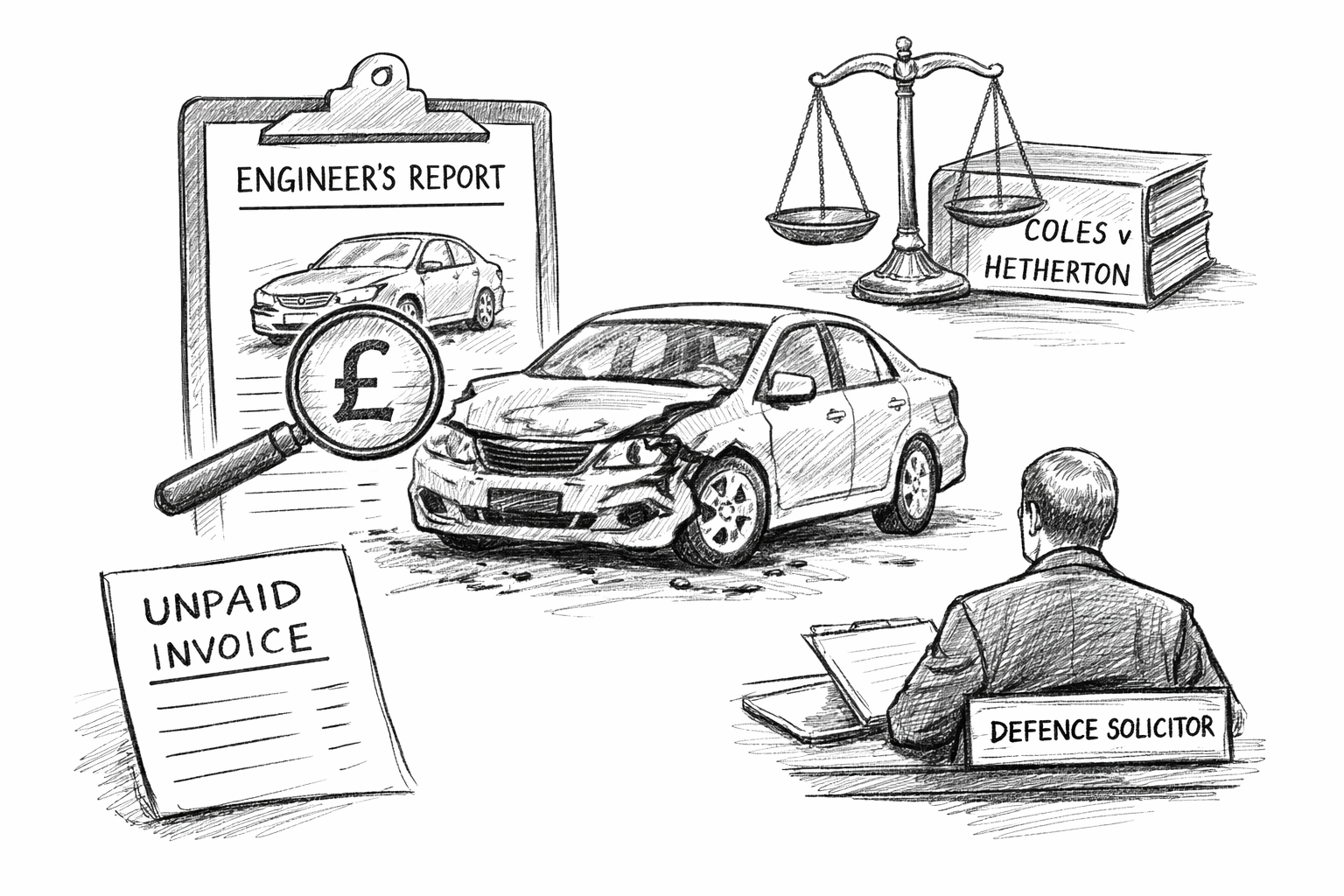
An insurer produces an engineer or assessor report identifying the reasonable cost of repairing accident damage. The defence then responds with a request for further documents, typically including:

  • proof that the repairs were actually carried out

  • the repair invoice

  • proof that the policyholder paid their excess.

The implicit suggestion is that, without these documents, the claim for repair costs cannot succeed.

As a matter of law, that suggestion is incorrect.


The Legal Loss Is the Damage to the Vehicle


The starting point is the orthodox principle governing damage to property.

In our previous article we explored the principle of Restitution Ad Integrum in the context of motor damage claims.

We clarified that when negligent driving damages a vehicle, the Plaintiff’s loss is the diminution in the value of the vehicle caused by the accident.

The Court of Appeal explained this clearly in Coles v Hetherton, stating:

the reasonable cost of repair is only a way of ascertaining the diminution in the value of the chattel by reason of the physical damage.

This passage identifies the crucial analytical point.

The repair cost is not the loss itself. Instead, it is simply the usual way in which the courts measure the reduction in value caused by the accident.

The loss arises at the moment the vehicle is physically damaged in the collision.


Repairs Are Not a Precondition to Recovery


The Court of Appeal in Coles v Hetherton also addressed the evidential question directly.

The court confirmed that the reasonable cost of repair may be assessed:

whether or not repairs have been done and whether or not an invoice is produced.

This reflects the underlying logic of the law.

If the Plaintiff’s loss is the diminution in value caused by the accident, it cannot logically depend on whether the plaintiff later chooses to repair the vehicle.

Vehicles are frequently:

  • sold unrepaired

  • written off

  • repaired privately

  • repaired at a later date.

In all of these scenarios, the loss caused by the accident still exists.

Accordingly, courts routinely assess vehicle damage using evidence such as:

  • engineer or assessor reports

  • repair estimates

  • expert evidence on repair methodology

  • valuation evidence.


What the Plaintiff Must Actually Prove


Although repairs are not required, the Planitiff must still prove the amount of the loss.

In practice this usually requires evidence establishing that:

  • the vehicle was repairable

  • the proposed repairs were reasonable and necessary

  • the claimed figure represents the reasonable cost of repair.

An independent engineer or assessor report will often provide precisely that evidence.

What the law requires is proof of the reasonable cost of repair, not proof that the repairs were actually carried out.


What About the Policy Excess?


In subrogated claims, defence solicitors sometimes also request proof that the Policyholder paid their policy excess to the insurer.

This request generally arises because the claim is being pursued by the insurer exercising rights of subrogation.

However, the legal analysis remains unchanged.

Subrogation simply allows the insurer to exercise the insured’s cause of action against the wrongdoer.

The measure of damages remains the same: the loss caused by the accident.

Whether the insured paid their excess is therefore primarily a matter between insurer and insured, rather than a prerequisite to establishing the defendant’s liability for the vehicle damage.


Why These Requests Arise in Practice


Requests for proof of repair are usually not based on the legal measure of damages.

More commonly, they reflect a forensic concern about the reasonableness of the claimed repair cost.

For example, the defence may wish to test:

  • whether the repair estimate reflects real market repair costs

  • whether the repair methodology is appropriate

  • whether the estimate includes unnecessary work.

Those are legitimate issues. But they go to the reasonableness of the repair cost, not to whether repairs were carried out.


The Real Litigation Point


A Plaintiff does not need to prove that repairs were carried out in order to recover damages for vehicle damage.

What must be proved is the reasonable cost of repairing the accident damage, which is simply the conventional way of quantifying the diminution in value of the vehicle.

An engineer’s or assessor’s report may be sufficient evidence of that figure.

Requests for repair invoices or proof that the policy excess was paid do not alter the fundamental legal principle confirmed in Coles v Hetherton.


Why This Matters for Subrogated Motor Claims


Subrogated claims frequently involve disputes over relatively modest property damage.

In that context, defence requests for additional documentation can sometimes risk obscuring the real legal issue.

The court’s task is not to determine whether repairs were carried out, but rather:

What is the reasonable cost of repairing the damage caused by the accident?

Where that question is answered by credible engineering evidence, the absence of a repair invoice does not prevent the court from assessing the claimant’s loss.

For practitioners handling motor damage claims, the lesson from Coles v Hetherton is straightforward: the law compensates the damage to the vehicle, not the repair invoice

General Damages for Allergic Reactions to Contaminated Food in Northern Ireland: A Gap in the Green Book


When contaminated or mislabelled food triggers an allergic reaction in Northern Ireland, courts must assess general damages despite the absence of a specific category within the Guidelines for the Assessment of General Damages in Personal Injury Cases in Northern Ireland (the “Green Book”).

Practitioners therefore often rely on analogous brackets such as food poisoning, neurological injury, or epileptic conditions when valuing these claims. This lack of direct guidance can create uncertainty in both settlement negotiations and litigation, particularly where the reaction involves anaphylaxis, seizures, or emergency hospital treatment.

As food allergy claims become increasingly common, this gap in the damages framework is becoming more apparent.


The Role of the Green Book in Assessing General Damages


In Northern Ireland, courts assess general damages for personal injury claims by reference to the Green Book damages guidelines.

The purpose of the Guidelines is to promote consistency, predictability and proportionality in the assessment of damages across personal injury litigation.

The Green Book provides damages brackets covering a wide range of injuries including:

  • orthopaedic injuries
  • psychiatric injury
  • neurological damage
  • illness caused by toxins or contaminated substances

For practitioners dealing with food contamination claims, the most relevant section is typically the category addressing illness caused by food poisoning.

However, the structure of that section reflects gastrointestinal illness, rather than allergic reactions caused by allergen exposure.


Damages Guidance for Food Poisoning Claims


The Green Book contains brackets for illness caused by food poisoning, typically involving symptoms such as:

  • vomiting
  • diarrhoea
  • abdominal pain
  • fever
  • temporary gastrointestinal illness

These cases generally involve short-term illness caused by contaminated food, with recovery occurring within a limited period.

Higher awards may arise where:

  • symptoms persist for longer periods
  • hospital treatment is required
  • complications develop

However, these brackets are primarily designed to address gastrointestinal illness, not anaphylactic reactions triggered by allergen contamination.


Allergic Reactions to Contaminated Food


A growing number of personal injury claims involve allergic reactions triggered by contaminated or mislabelled food and we previously wrote about the experience of our client Ciara.

These claims frequently arise where:

  • restaurants fail to disclose allergens
  • cross-contamination occurs during food preparation
  • packaged food products are incorrectly labelled
  • food safety procedures are inadequate

For individuals with severe allergies, exposure to allergens such as nuts, shellfish, dairy or sesame can trigger an immediate and potentially life-threatening reaction.

Symptoms may include:

  • anaphylaxis
  • respiratory distress
  • collapse or loss of consciousness
  • seizures
  • emergency treatment with adrenaline

Although these episodes may sometimes be short-lived, they can involve significant medical intervention and considerable distress for the individual.


When Allergic Reactions Cause Seizures


A particularly complex issue arises where an allergic reaction to contaminated food results in seizure activity.

Seizures may occur due to:

  • severe anaphylactic reactions
  • oxygen deprivation caused by respiratory distress
  • extreme physiological stress during the reaction

In many cases the seizure is an isolated event, and the claimant does not develop epilepsy.

Nevertheless, the episode may involve:

  • ambulance attendance
  • emergency treatment
  • hospital admission
  • temporary neurological symptoms

Despite the seriousness of such events, the Northern Ireland Green Book damages guidelines contain no specific bracket addressing seizures caused by allergic reactions.


How Are General Damages Assessed for Allergic Reactions to Contaminated Food in Northern Ireland?


Where contaminated food causes an allergic reaction, courts must assess general damages by examining the nature and severity of the medical episode.

Because the Green Book does not contain a specific bracket for allergic reactions or anaphylaxis, practitioners and courts often rely on analogous injury categories when valuing these claims.

Possible comparators include:

Food Poisoning

The food poisoning brackets may provide a starting point, particularly where the symptoms are short-lived.

However, these brackets may undervalue cases involving anaphylaxis or seizure activity, as they are primarily designed to address gastrointestinal illness.

Epileptic Conditions

Where a seizure occurs, practitioners may look to the brackets relating to epileptic conditions.

This comparison is often imperfect where:

  • the claimant does not suffer from epilepsy
  • the seizure is an isolated episode
  • the seizure was triggered solely by the allergic reaction.

Neurological Injury

In some cases, the injury may also be compared with minor neurological injury.

Again, this approach requires courts to rely heavily on analogy rather than direct guidance.


Why This Gap in the Green Book Matters


The absence of specific guidance for allergic reaction claims caused by contaminated food creates several practical difficulties.

Inconsistent Settlement Values

Without a clear damages bracket, similar claims may be valued very differently.

Uncertainty for Practitioners

Solicitors advising clients may find it difficult to predict likely damages with confidence which normally means more cases proceeding to court.

Increasing Relevance

Food allergy claims have become more common due to:

  • increased awareness of food allergies
  • stricter allergen labelling requirements
  • greater public awareness of allergen risks

As these claims become more frequent, the absence of clear damages guidance becomes increasingly significant.


Factors Likely to Influence General Damages


In the absence of specific guidelines, courts assessing general damages for allergic reactions to contaminated food may consider:

  • the severity of the allergic reaction
  • whether anaphylaxis occurred
  • the presence of seizures or neurological symptoms
  • the duration of symptoms
  • whether hospital admission was required
  • the extent of emergency medical treatment
  • the psychological impact of the incident

These factors may ultimately determine whether the injury is best viewed as:

  • serious illness
  • neurological injury
  • or a severe but temporary medical episode.

Conclusion on Claims for Allergic Reactions


The Northern Ireland Green Book damages guidelines provide valuable guidance across many areas of personal injury litigation. However, they contain no clear category addressing severe allergic reactions caused by contaminated food, particularly where such reactions lead to seizures or other neurological symptoms.

As allergen contamination claims become more common, this gap in the Guidelines may create increasing uncertainty in the assessment of general damages in Northern Ireland personal injury claims.

Future revisions of the Green Book may therefore benefit from including specific guidance addressing anaphylactic reactions and allergen contamination injuries, providing greater clarity for practitioners, insurers and courts.

Accidents at Work in Northern Ireland: Falls from Height and Employer Liability


Falls from height remain one of the most serious causes of workplace injury in Northern Ireland. Employees working in construction, agriculture, manufacturing, maintenance and industrial environments are frequently required to work at height using ladders, scaffolding, roofs or elevated platforms.

Where appropriate safety systems are not properly implemented, the consequences can be severe and sometimes life-changing.

Under Northern Ireland law, employers have important duties to protect workers who carry out tasks at height. Where those duties are breached and a worker suffers injury, the circumstances may give rise to a workplace accident claim.

This article explains:

  • The legal framework governing working at height in Northern Ireland
  • The most common causes of fall-from-height accidents
  • The types of injuries that can arise
  • When an employer may be legally liable

What Is a Working at Height Accident?


A working at height accident occurs when a worker falls from a ladder, scaffolding, roof, platform or other elevated surface while carrying out their job. These accidents are one of the leading causes of serious workplace injuries in Northern Ireland and often arise where appropriate safety equipment, supervision or risk assessments were not in place.


Workplace Accident Statistics in Northern Ireland


Workplace accident statistics highlight the seriousness of working at height risks.

Figures published by the Health and Safety Executive for Northern Ireland (HSENI) indicate that:

  • There were 19 workplace fatalities in Northern Ireland in 2021–2022
  • The number fell to 10 fatalities in 2022–2023
  • The majority of deaths occur in agriculture, construction and manufacturing

Falls from height remain one of the leading causes of fatal workplace accidents across these industries.

In the construction sector in particular, regulators consistently warn that working at height continues to present a high level of risk if appropriate safety precautions are not taken.

These figures demonstrate why employers must take working at height safety extremely seriously.


The Legal Framework for Working at Height in Northern Ireland


Employers in Northern Ireland owe a statutory duty to ensure the health and safety of their employees.

The primary legislation governing workplace safety is the:

Health and Safety at Work (Northern Ireland) Order 1978

This legislation requires employers to ensure, so far as reasonably practicable, the health, safety and welfare of employees while at work.

More specific duties relating to working at height are contained in the:

Work at Height Regulations (Northern Ireland) 2005

Under these regulations, employers must ensure that work at height is:

  • Properly planned and organised
  • Appropriately supervised
  • Carried out by competent workers
  • Supported by suitable and properly maintained equipment
  • Subject to a suitable and sufficient risk assessment

Employers are also required to follow a recognised hierarchy of safety measures, including:

  1. Avoiding work at height where possible
  2. Preventing falls through collective protection (such as guardrails or scaffolding)
  3. Minimising consequences using fall-arrest systems or personal protective equipment

What Counts as Working at Height?


Many people assume that working at height only refers to high-rise construction work. In reality, the legal definition is much broader.

A person is considered to be working at height if they are working in any place where a fall could cause personal injury.

Examples include:

  • Working on scaffolding
  • Using ladders or step ladders
  • Carrying out roof repairs
  • Working on mezzanine floors or raised platforms
  • Using cherry pickers or scissor lifts
  • Working near unprotected edges

Importantly, even relatively low falls can cause serious injuries.


Common Causes of Falls from Height at Work


Many workplace accidents involving falls from height occur because basic safety procedures have not been followed.

Common causes include:

  • Unsafe or defective ladders
  • Poorly erected scaffolding
  • Lack of guardrails or edge protection
  • Failure to provide safety harnesses or fall-arrest systems
  • Inadequate training or supervision
  • Failure to carry out appropriate risk assessments
  • Slippery or unstable working surfaces

In many accident investigations it becomes clear that the accident could have been prevented if appropriate safety systems had been implemented.


Serious Injuries Caused by Falls from Height


Falls from height frequently result in serious injuries due to the forces involved in the fall.

Common injuries include:

  • Traumatic brain injuries
  • Spinal cord injuries
  • Pelvic fractures
  • Complex limb fractures
  • Internal organ damage

These injuries often require long-term treatment, rehabilitation and ongoing medical support.  Our office recent deal with a case involving a construction worker who fell from a scaffolding and suffered complex injuries.

In more serious cases, a worker may be unable to return to their previous employment.


When Is an Employer Liable for a Workplace Accident?


Employers may be legally liable for a workplace accident if they have failed to take reasonable steps to protect employees from foreseeable risks.

Examples may include:

  • Failure to provide safe access equipment
  • Failure to install guardrails or edge protection
  • Poor maintenance of scaffolding or ladders
  • Failure to carry out appropriate risk assessments
  • Lack of training or supervision

Where an employer breaches health and safety duties and an injury results, this may form the basis of a claim for workplace injury compensation.


Bringing a Fall from Height Compensation Claim


If you have been injured in a workplace accident in Northern Ireland, you may be entitled to pursue a compensation claim.

Compensation may include damages for:

  • Pain and suffering
  • Loss of earnings
  • Future loss of income
  • Medical treatment
  • Rehabilitation costs
  • Care and assistance needs

Serious accident at work claims often require detailed medical evidence together with expert analysis of future financial losses.

For this reason, it is important to obtain advice from solicitors experienced in workplace injury litigation.


Frequently Asked Questions


How long do I have to bring an accident at work claim in Northern Ireland?

In most cases, a person has three years from the date of the accident to issue court proceedings for personal injury.

Can I claim compensation if I fell from a ladder at work?

Possibly. If the accident occurred because of unsafe equipment, lack of training, or inadequate safety procedures, there may be grounds for a claim.

What if I was partly responsible for the accident?

Even where a worker may have contributed to the accident, compensation may still be recoverable, although the award may be reduced to reflect contributory negligence.


Conclusion


Working at height remains one of the most dangerous activities carried out in workplaces across Northern Ireland.

Despite clear legal duties designed to protect workers, falls from height continue to cause serious injuries and fatalities each year.

Where safety procedures are ignored or inadequate, the consequences can be devastating for workers and their families.

Anyone injured in a workplace accident should consider obtaining legal advice in order to understand their rights and whether compensation may be available.


When Early Irish Law Outpaces Us: Binchy, Bretha Crólige and the Curious Case of Sick-Maintenance

Introduction


As an insurance lawyer, my working day revolves around damages: how much, to whom, and for what. We argue over loss of earnings, cost of care, special damages, general damages. We measure, calculate, dispute, and settle. It is an elaborate system – but, at its core, still about money as compensation.


Law and its Prominence in Early Gaelic Literature


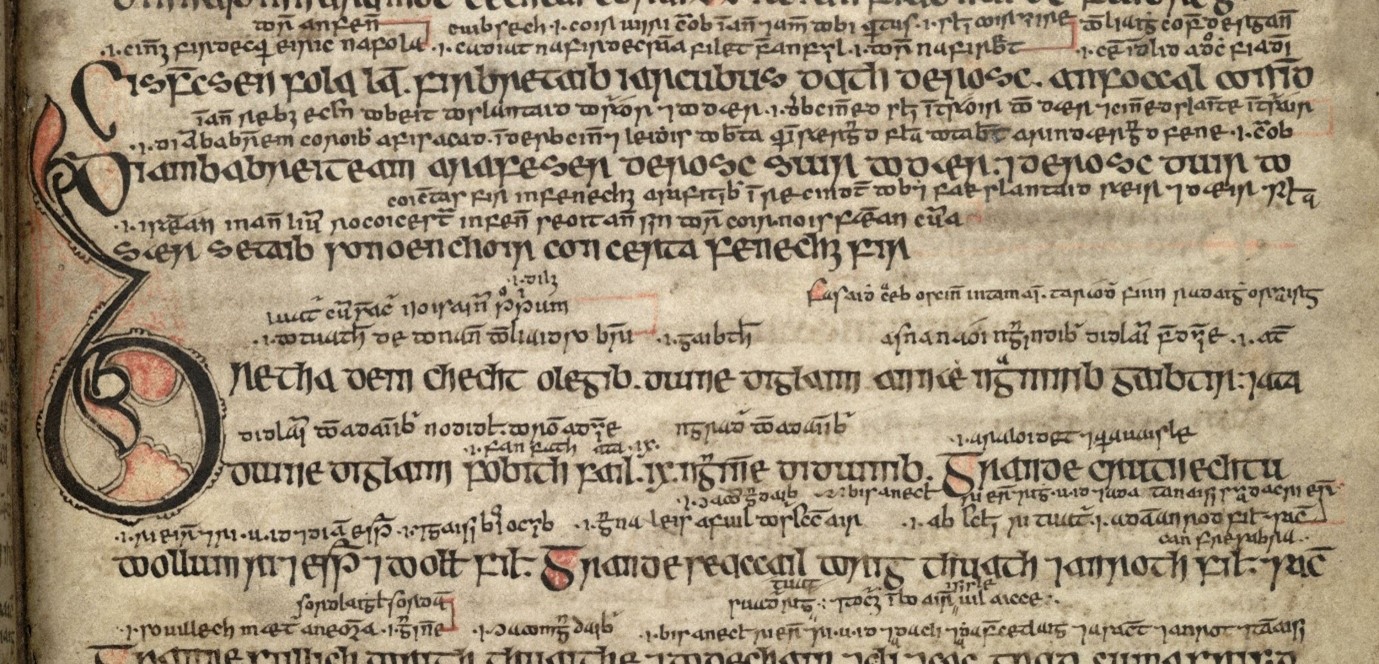
Recently, I have been studying early Gaelic (Irish) literature and the importance of Irish law. Law is so central in early Irish literature because it was closely linked to how society explained and maintained itself. The jurists (brithemain) belonged to the same learned class as poets and historians, and their work was preserved as senchas – tradition – rather than as abstract statutes. This is why the great collection Senchas Már lies at the core of the legal corpus: it is presented not just as law but as a narrative, connecting rules to origin legends and the authority of saints and kings. Within it, texts like Bretha Crólige (“Judgements on Sick-Maintenance”) demonstrate how vividly law could respond to real-life situations, detailing the obligations owed to a wounded person. Together, they show why law dominates early Irish writing: it was both the backbone of social order and a vital part of cultural memory, recorded in the same literary medium as history, poetry, and saga.


Binchy and Bretha Crólige


D. A. Binchy’s edition of Bretha Crólige, the Old Irish tract on “blood-lying” (sick-maintenance- or othrus) is worth analysis, in the modern context. Binchy’s central observation is simple but striking. While compensation tariffs for injury are broadly Indo-European, the Irish obsession with the day-to-day maintenance of the injured person is unique in its detail.


Tariffs Across Europe


Most early medieval legal systems, from the Salic Law to the Welsh Laws of Hywel Dda, worked from tariffs: so many shillings for an eye, so many for a tooth, a sliding scale for fingers and toes. The idea was familiar: money smooths over disruption.

The Irish texts contain these tariffs too – tables of éraic (compensation) for wounds and insults, carefully graded by rank. In that sense, Ireland sits squarely in the European mainstream.


The Irish Twist: Crólige as Obligation


But Bretha Crólige adds a twist. As Binchy notes:

“The most striking feature of Bretha Crólige is its detailed regulation of sick-maintenance: the obligation imposed on the injurer to feed and tend the wounded man until recovery.”

Here, damages aren’t just a payout. They become an obligation to care: housing the victim, feeding him, paying for his doctor, maintaining his household. The wrongdoer is bound, day after day, into the life of the person he injured.

The tract even specifies food schedules and arrangements for substitutes. Where our modern system trusts a lump sum to cover uncertainty, the Irish law, first demanded continuous support until recovery.


What Struck Me as a Modern Lawyer


Coming to this with my insurance-law lens, I couldn’t help mapping Bretha Crólige onto today’s compensation landscape: Whilst there was no award for pain and suffering, there was an emergence of various heads of damages.

  • Loss of earnings? Covered, because the wrongdoer sustains both victim and dependants.
  • Special damages for care? Built in: the wrongdoer must provide the care directly.
  • Future uncertainty? Managed, because the obligation continues until the end of illness (or life).

The justice was far from egalitarian—rank dictated quality of care—but the concept is profoundly restorative rather than purely monetary.


Why It Matters


Bretha Crólige raised a challenge that hasn’t gone away. Modern tort law prizes once-and-for-all damages, tidy settlements. Yet whenever we deal with long-term care claims, periodic payment orders, or disputes over statutory benefits, I find myself wondering whether the old Irish lawyers had a point: sometimes justice looks less like a cheque and more like an obligation to keep showing up.


Conclusion


Bretha Crólige showed us a legal system that refused to reduce injury entirely to money. It tied wrongdoer to victim in an ongoing relationship of care. It was an example of an approach focused on the victim, rather than the wrongdoer or the society that condoned the wrongdoer. Not that it was universal, however. In his introduction to A Guide to Early Irish Law, Fergus Kelly notes that another text, Críth Gablath, stated that the institution of orthus or sick maintenance was obsolete and had been replaced by payment of appropriate fines. Perhaps an early example of a change in the law, moving away from a restorative based approach, as Kelly suggested one of the possible reasons (he offers several) for the variation, being differences in dates between the texts.

The Role of Private Investigators in Personal Injury Litigation: A Vital Tool for Insurance Defence

In today’s complex claims landscape, private investigators (PIs) play a pivotal role in supporting insurance defence teams across Ireland. When used appropriately and ethically, surveillance can provide crucial clarity in contested personal injury cases—helping insurers, employers, and self-insured entities to challenge fraudulent or exaggerated claims while preserving fairness and legality.

At Lacey Solicitors, our insurance defence team advises clients on the lawful use of private investigators throughout Ireland, from initial instructions to evidentiary use at trial. This blog outlines how private investigators can support your defence strategy, the legal and ethical constraints that must be respected, and the parallel obligations claimant solicitors owe their clients in the digital age.


Why Use Private Investigators in Insurance Defence?


Private investigators are not used to entrap or harass claimants. Their purpose is to objectively observe and document claimants’ day-to-day activities in public places, ensuring consistency with alleged injuries.

While most personal injury claims are legitimate, a small percentage involve inconsistencies between the reported symptoms and a claimant’s actual physical capabilities. This is where private investigators can play a key role—documenting evidence that may influence liability, quantum, or settlement negotiations.

In fact, many surveillance reports support the claimant’s version of events, confirming limitations in movement or pain behaviour. But in cases of exaggeration or fraud, this evidence can be game-changing.


Types of Evidence Collected by Private Investigators in Personal Injury Cases


Where appropriate, surveillance operatives can be called to give evidence in court.  It is important to note that PI witnesses, are lay witnesses and not considered expert witnesses by the courts in Ireland.  The role of the witness is simply to report on the basis of what was observed.  It would be inappropriate for an investigator to proffer a view on an individuals injuries in the context of their observations.

  1. Video Surveillance

Video remains the gold standard. PIs may discreetly observe individuals in public settings—walking dogs, lifting bags, entering gyms, or playing sports. If such activities contradict the claimant’s injury reports, this can raise serious credibility issues.

  1. Social Media Monitoring

Platforms like Facebook, TikTok, and Instagram offer a treasure trove of publicly available information. Our office has previously commented on How Social Media Evidence Impacts Personal Injury Cases in Northern Ireland and the Republic of Ireland.

A claimant posting holiday selfies or gym check-ins while claiming to be housebound may unknowingly undermine their own case.

It’s essential that investigators only access content that is publicly visible and refrain from unethical tactics like using false profiles or deceptive friend requests.


Legal and Ethical Framework in Ireland


Surveillance is not a free-for-all. Solicitors and insurers must ensure that investigations comply with:

  • GDPR and Data Protection Act 2018
  • Irish common law privacy rights
  • The Law Society of Ireland’s professional conduct rules

Some key legal limitations include:

  • Surveillance may only take place in public areas; entering or filming private property is strictly prohibited.
  • Pretexting—posing as a delivery driver or service provider—is unlawful and unethical.
  • Social media access must be limited to public content. Fake accounts or deception is never acceptable.

The Claimant Solicitor’s Duty: Mitigating Surveillance Risks


While the spotlight often falls on insurers and defence teams, claimant solicitors also have critical obligations. As highlighted in an Irish Independent article, legal representatives are actively warning clients about the risks posed by surveillance and social media exposure.

Many fail to grasp that they have a responsibility to do so.

Some responsibilities include:


  • Educating clients about surveillance: Explaining that investigators may monitor their public behaviour and online activity.
  • Advising on social media content: Warning clients to avoid posting, sharing, or interacting with public content that could be misinterpreted.
  • Clarifying disclosure obligations: Ensuring clients understand that relevant online content may be discoverable in litigation.
  • Avoiding client misconduct: Discouraging clients from deleting content or accepting friend requests from unknown accounts—both could raise red flags or jeopardise credibility.

Failure to advise clients appropriately could expose a claimant solicitor to criticism or indeed an allegation of professional negligence, particularly where social media evidence leads to case dismissal or reputational damage.


The Defence Solicitor’s Role in Managing PI Use


At Lacey Solicitors, our approach to instructing private investigators is grounded in professionalism, oversight, and compliance. We ensure that:

  • All investigators are licensed and insured;
  • Surveillance is conducted strictly within the legal and ethical parameters;
  • Instructions are documented, specific, and proportional to the claim;
  • All evidence is reviewed for admissibility and probative value;
  • Investigations are immediately suspended if there is any sign of misconduct.

Surveillance must be used strategically, never as a fishing expedition. The goal is fairness and factual clarity—not harassment or intimidation.


Balancing Truth and Privacy in Injury Litigation


Surveillance evidence can be a useful tool in defending personal injury claims, but it must be approached with caution. Irish courts accept such evidence where it is gathered lawfully, proportionately, and in response to genuine concerns—such as suspected exaggeration or dishonesty. However, any intrusion into a claimant’s privacy must be justified, and covert surveillance without cause is likely to backfire.  Defence solicitors must balance the right to investigate with the claimant’s right to privacy.

Private investigators must operate within strict legal and ethical parameters. Filming must take place only in public settings, and investigators should not use deceitful tactics like false identities or hidden tracking devices. If these boundaries are crossed, the evidence may be ruled inadmissible, and the instructing party—whether solicitor or insurer—could face consequences.

Overall, while surveillance can assist in exposing fraudulent or exaggerated claims, it must be used strategically, sparingly, and with full regard for privacy rights and data protection law. Solicitors play a key role in supervising investigators and ensuring compliance throughout the process.

At Lacey Solicitors, we work with insurers and self-insured clients across Ireland to ensure surveillance is conducted professionally and strategically, without breaching legal or ethical obligations.


Contact Us


If you are defending a personal injury claim and are considering the use of surveillance evidence, speak with Lacey Solicitors today using our Online Portal. Our Dublin insurance defence team can provide strategic advice and ensure your investigations comply with Irish and EU legal standards.


Life is full of dangers and judicial prose…

A Sideways Glance to the Court of Appeal decision in


Kandaurova

V

 Circle K Energy Group Ltd


Brilliant.

The opening to Noonan J’s Court of Appeal judgment this week in the case of Kandaurova v Cirkle K Energy Group Ltd. was brilliantly effective, reminiscent of the vivid staccato style often associated with Lord Denning in his pomp. To Denning, the writing of judgments was an art form.  And the beginning mattered:

I try to make my judgments live … I start my judgment, as it were, with a prologue – as the chorus does in one of Shakespeare’s plays – to introduce the story.

Professor James Raymond, former Professor of Rhetoric at the University of Alabama, maintained that the first page of a judgment is “prime real estate.” In a well-constructed judgment, “the front page says it all.”


Danger here

In Kandaurova, Noonan J opened as follows;

Life is full of dangers which may cause injury if not avoided.  Small children develop by encountering and learning to avoid things that can be fallen off, bumped into, tripped over or knocked down.  In the common law of occupiers’ liability, ordinary everyday dangers are described as “usual” and as such, do not attract liability

The reader is given a simple and direct introduction to the case. The direction of the wind is clear. People can be injured due to danger, but where it is a usual or common danger, there may not be a liability. In this case, a lady tripped on a kerb. It was not defective. The Court of Appeal held that she could not recover damages from the Occupier.


The Bluebell opening

There are other fine examples of opening paragraphs in Personal Injury cases. Denning’s ‘Bluebell opening’ is perhaps the most celebrated;

It happened on the 19th April, 1964. It was bluebell time in Kent, Mr. and Mrs. Hinz had been married some 10 years, and they had four children, all aged 9 and under. The youngest was one. Mrs. Minz was a remarkable woman. In addition to her own four, she was foster-mother to four other children. To add to it, she was two months pregnant with her fifth child.

On this day they drove out in a Bedford Dormobile van from Tonbridge to Canvey Island. They took all eight children with them. As they were coming back they turned into a lay by at Thurnham to have a picnic tea. The husband, Mr. Hinz, was at the back of the Dormobile making the tea. Mrs. Hinz had taken Stephanie, her third child, aged 3, across the road to pick bluebells on the opposite side. There came along a Jaguar car driven by Mr. Berry, out of control. A tyre had burst. The Jaguar rushed into this layby and crashed into Mr. Hinz and the children. Mr. Hinz was frightfully injured and died a little later. Nearly all the children were hurt. Blood was streaming from their heads. Mrs. Hinz, hearing the crash, turned round and saw this disaster. She ran across the road and did all she could. Her husband was beyond recall. But the children recovered.


Home Run

This blog has previously written of the Irish case of Kane v Kennedy and Budd J’s tremendously evocative :

The news of the death of Joe DiMaggio came while I was writing this judgment. His record streak in 1941, when he got a hit in fifty-six consecutive games, still stands. His grace at the plate and his defensive qualities at centre field, his leadership of the New York Yankees to victory in nine of the ten World Series in which he led them, and above all his gentlemanly conduct made him a legend in his own lifetime. I wonder what he would have made of the problems with which I have been confronted in resolving the conflicts of evidence presented by what followed the strike by Alice Dunne during the game of rounders played in the sports hall of a convent school in Glasnevin on the morning of Tuesday 21st May 1996.


Life and Death

One of the first Constitutional cases this reader encountered was the X Case (1992). This form Denham J:

This application for an injunction raises issues of the utmost seriousness affecting a girl of 14 years of age and her family. It concerns matters of life and death, and touches on the deepest aspects of human experience and the moral and legal norms of our Justice.


Short and Sweet

Lord Hoffmann’s opening to his judgment in the case Investors Compensation Scheme Ltd v West Bromwich Building Society could not have been in plainer language;

My Lords, I have had the advantage of reading in draft the speech prepared by my noble and learned friend, Lord Lloyd of Berwick. I agree with it, and for the reasons which he has given, I would allow the appeal.


Signal of Intent

Lord Wilberforce in Anns v Merton London Borough Council got straight to the point with:

In my opinion the time has come when we should say that the law ought to recognise our responsibility going beyond the present cases, a duty to behave conscientiously, responsibly and with humanity.


Lunar Law

For the property lawyers out there, what about I leave you with this from our Supreme Court and Higgins CJ in Vone Securities Ltd v. Cooke:

As stated by Mr. Justice Costello in his Judgment, at common law the ordinary primary meaning of month, when used in instruments such as leases, was and is lunar month. This meaning is taken to be intended by the parties to any such instrument unless that instrument read as a whole, or the surrounding contemporaneous circumstances, show that the other, or secondary meaning, of calendar month, was, in fact, intended. It will, no doubt, surprise many people to learn that a rule as archaic as this surely is and so far removed from the needs and uses of modern society should still be part of our law. Even in the days of Charles Dickens, the rule was probably sufficiently out of date to justify Mr. Bumble’s description of the law. Today, its continued existence as a rule of the common law is opposed to all common sense and indicates how much remains to be done by way of reform to bring the common law up to date.

You learn something new every day! Or should that be every 1/29th of a lunar month (Approx. Maths is not my thing)

Supreme Court Decision in Delaney v PIAB Case Eagerly Anticipated

Introduction


The forthcoming Supreme Court ruling in Delaney v PIAB, The Judicial Council of Ireland and The Attorney General is one of the most closely watched personal injury cases in Ireland. The decision, expected on 9th April, could have far-reaching implications for the Personal Injuries Guidelines, the role of PIAB, and how courts assess general damages in compensation claims.


Background to the Delaney Case


On 12th April 2019, Mrs Delaney suffered a fall on a public footpath, grazing her knee and sustaining a minor ankle fracture (an undisplaced fracture of the right lateral malleolus).

  • She submitted her claim to PIAB, naming Waterford City and County Council as the respondent.
  • Under the Book of Quantum, she was advised that general damages would likely fall between €18,000 and €34,000.
  • However, PIAB assessed her damages at just €3,000, applying the new Personal Injuries Guidelines introduced in 2021.

This stark difference in award values led Mrs Delaney to initiate Judicial Review proceedings, arguing that PIAB had acted unlawfully by applying the Guidelines instead of the Book of Quantum.


Grounds of the Judicial Review


The applicant challenged the validity of the Guidelines on four main constitutional grounds:

  1. Unconstitutional Delegation of Power – The Judicial Council Act 2019 allegedly failed to provide sufficient “principles and policies” for drafting the Guidelines, contrary to Article 15.2.1 of the Constitution.
  2. Judicial Independence – It was argued that the Act infringed Article 35.2, which guarantees the independence of the judiciary.
  3. Retrospective Application – The Guidelines were applied retrospectively, allegedly depriving the applicant of vested rights.
  4. Disproportionality & Property Rights – The significantly lower awards were said to be irrational, disproportionate, and an infringement of constitutional rights to property, bodily integrity and equality.

High Court Decision by Mr Justice Meenan


The High Court dismissed the applicant’s challenge, finding that:

  • The awarding of general damages must reflect not only the interests of plaintiffs and defendants but also broader economic and social policy considerations.
  • Section 90 of the Judicial Council Act 2019 clearly set out the necessary “principles and policies”.
  • The Judicial Council Committee had properly applied those principles in drafting the Guidelines.
  • Some categories of injury saw increased damages, showing the Guidelines were not simply about reducing awards.
  • The Committee was entitled to benchmark against awards in other jurisdictions.
  • As courts retain the power to depart from the Guidelines, judicial independence was not undermined.
  • Constitutional rights do not guarantee a plaintiff a fixed sum of damages, only a fair assessment under law.
  • PIAB acted lawfully under the PIAB Act 2003 (as amended) in making its assessment.

Why This Case Matters to Insurance Defence Lawyers in Ireland


The Supreme Court’s forthcoming judgment will be pivotal for:

  • Personal Injury Claimants – Clarifying whether awards under the Guidelines can be constitutionally sustained.
  • PIAB Assessments – Confirming whether PIAB was correct to apply the Guidelines instead of the Book of Quantum.
  • Irish Personal Injury Law – Determining the balance between fair compensation, judicial independence, and the State’s interest in controlling damages levels.

Conclusion


The Delaney case has become a landmark test for the Personal Injuries Guidelines in Ireland. The Supreme Court’s ruling will provide crucial clarity for solicitors, insurers, claimants, and defendants alike. Whether the Guidelines stand or are struck down, this decision will shape the future of personal injury compensation in Ireland.


Sports Writing, Shane Warne, The Master of the Rolls and Baseball

Part One: A Blog by Damian McGeady

Donegal Memories

Until recently, I thought that I had read the greatest legal paragraph ever written in my first week as a law undergraduate. I know that it’s a bit niche, but please do bear with me. It was written by Lord Denning. That was in 1993. Sam Maguire was sitting behind a bar in Maghera at the time, well-oiled in his first week in Derry. I had spent the summer driving and dreaming. Driving a TNT liveried van around every back road in Donegal, dreaming of Croke Park on the third Sunday in September. I was listening too. To every ball of the 1993 Ashes series. Not that I had been a fan of Cricket before then. The FM signal in Donegal was patchy. The one constant was Long Wave. And so, it was for me a summer of BBC Test Match Special on the World Service.


Old Trafford (Not That One)


Do you remember Shane Warne’s Ball of the Century? I do. I was in a Ford Transit van driving from Gweedore to Letterkenny. I had just passed the foot of Errigal, there passed McGeady’s Pub at the rise above the Poisoned Glen. The Sky was cloudless. It was his first Ashes ball. And I heard it, live. I was hooked. Until then, I didn’t get cricket.

Lord Denning did. He got cricket. Weeks later, with the ink barely dry on my USIT card, I read the opening of his judgement in the case of Miller v Jackson.


Early Influences: Sports Writing


I was a fan of good sports writing. I had devoured Paul Kimmage’s Rough Ride that summer. Earlier in the year I had read Nick Hornby’s Fever Pitch. On Sundays it was Brian Glanville and Hugh McIllvaney in the broadsheets. Then there was Denning’s Miller v Jackson opening paragraph.


County Durham: Denning on Village Cricket


“In summertime village cricket is the delight of everyone. Nearly every village has its own cricket field where the young men play and the old men watch. In the village of Lintz in County Durham they have their own ground, where they have played these last seventy years. They tend it well. The wicket area is well rolled and mown. The outfield is kept short. It has a good club-house for the players and seats for the onlookers. The village team play there on Saturdays and Sundays. They belong to a league, competing with the neighbouring villages. On other evenings after work they practice while the light lasts. Yet now after these 70 years a Judge of the High Court has ordered that they must not play there anymore…”

Denning’s whimsical piece is a joy of sporting and legal literature. He got cricket the way John Woodcock got cricket. On his death, Woodcock was hailed the poet laureate of cricket writers.


New York: Roger Angell and Baseball


Roger Angell might be described as the poet laureate of Baseball. In 2014, Sports Illustrated called him the greatest baseball writer in America. He wrote regular essays in The New Yorker. In doing so, it quoted his 1975 piece, Agincourt and After, where he described:

“The infantile and ignoble joy that sends a grown man or woman to dancing and shouting with joy in the middle of the night over the haphazardous flight of a distant ball—seems a small price to pay for such a gift.”


Dublin: Mr Justice Declan Budd and Irish Baseball Writing


Mr Justice Declan Budd could have given Angell a run for his money. The Irish High Court Judge retired in 2011 after 20 years on the bench. It was only recently that I became aware of his judgement in the 1999 case of Kane v Kennedy, which I happened upon by accident.

“The news of the death of Joe DiMaggio came while I was writing this judgment. His record streak in 1941, when he got a hit in fifty-six consecutive games, still stands. His grace at the plate and his defensive qualities at centre field, his leadership of the New York Yankees to victory in nine of the ten world series in which he led them, and above all his gentlemanly conduct made him a legend in his own lifetime. I wonder what he would have made of the problems with which I have been confronted in resolving the conflicts of evidence presented by what followed the strike by Alice Dunne during the game of rounders played in the sports hall of a convent school in Glasnevin on the morning of Tuesday 21st May 1996.”

I read it again. And again.


Looking Ahead: Part Two


In Part Two, we explore further Mr Justice Budd’s judgement and other Irish judicial references to sport.