
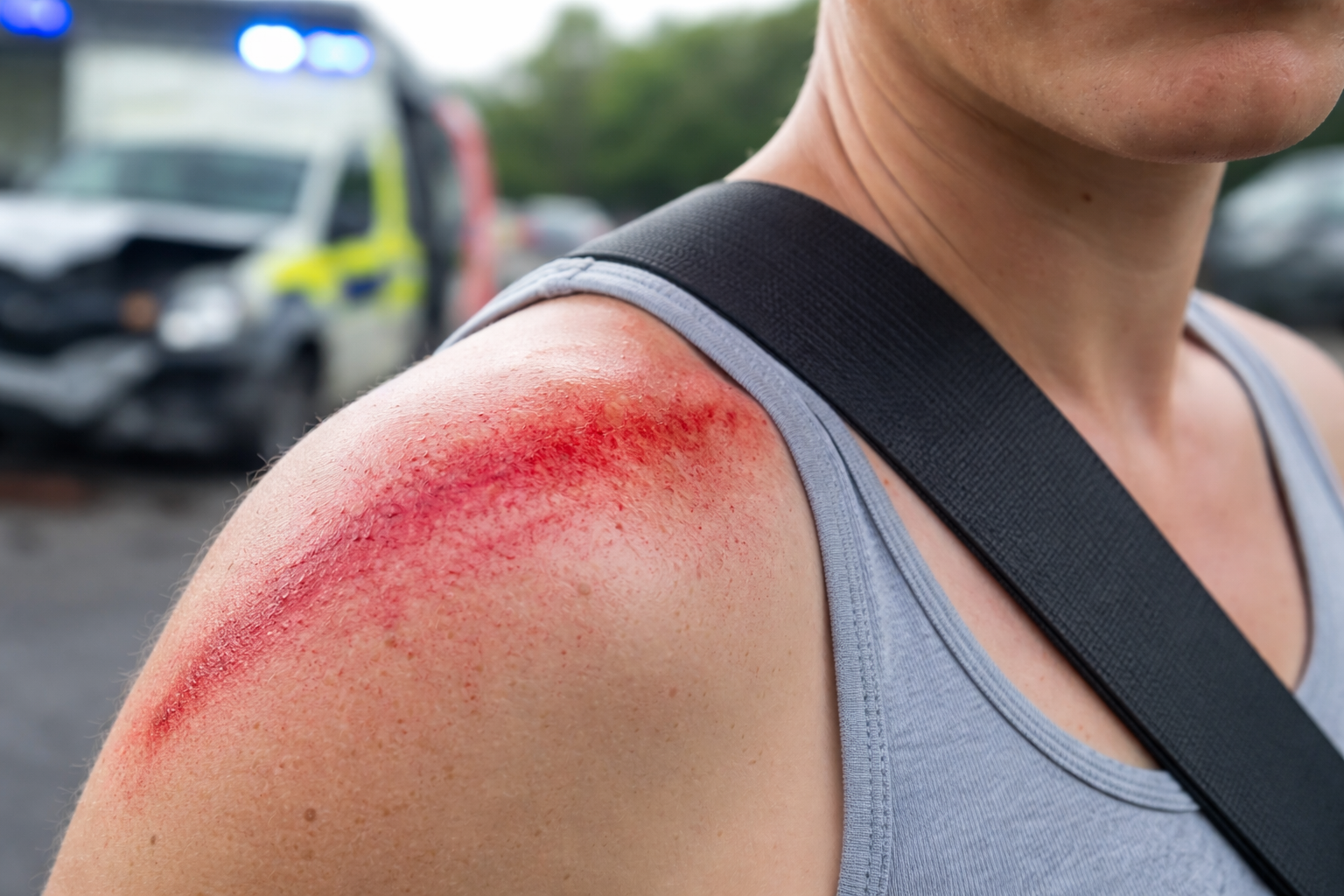
Scarring, Burns and Dermatology Injuries After Road Traffic Accidents in Northern Ireland

Skin injuries are often underestimated after a road traffic accident in Northern Ireland.

Many people initially focus on the more obvious consequences of a collision such as whiplash, back pain or general soreness. Only later do they realise that an injury to the skin can have a deeper impact than expected. Scarring, burns and other dermatology related problems can affect movement, confidence and emotional wellbeing for far longer than many anticipate. These injuries can feel very personal, particularly when they appear on visible areas such as the hands, face or arms. People regularly express surprise at how much a skin injury influences everyday life long after the accident itself.

In Northern Ireland, a wide range of accident types can lead to dermatology injuries. Rear end incidents, side impacts, collisions at junctions and even low speed bumps can result in abrasions, burns or lacerations. The skin reacts to trauma in ways that are not always immediately obvious. Some injuries remain painful for weeks. Others heal physically but leave lasting marks that affect confidence. Understanding how these injuries arise and how they affect people can help individuals make sense of what they are experiencing after an accident.


How Dermatology Injuries Happen During an Accident


The skin can be damaged in several ways during a collision. Airbags deploy rapidly with considerable heat, which can cause irritation or superficial burns. Seatbelts tighten abruptly and can create friction injuries across the chest, neck or shoulder. Broken glass may cause small but significant cuts during a side impact or T bone collision. Even contact with interior surfaces of the vehicle can leave marks that take time to heal.

Some injuries do not seem serious at the time but grow more noticeable as the days pass. People often mention that swelling, discolouration or raised scarring appeared only after the initial shock faded. This is completely normal and something many individuals across Northern Ireland experience following a road traffic accident.


Injuries That Commonly Affect the Skin


Lacerations are among the most frequent injuries, especially when glass is involved. These wounds may heal quickly but can leave visible scars that last for years. Seatbelt friction burns can create patches of tender, reddened skin that remain sore for an extended period. Airbag burns may appear as dry or irritated patches that require ongoing care. Some people also experience deeper tissue bruising that changes colour before slowly fading.

Dermatology injuries vary widely in severity. Minor cuts might heal with little difficulty. More significant wounds can result in permanent marks or areas of sensitivity. People often explain how they were surprised by the emotional response these injuries created, particularly when they affected their appearance.


Psoriasis and Other Conditions Triggered by Trauma


A lesser known but increasingly discussed issue is the triggering or worsening of psoriasis and other skin conditions after a collision. Many individuals in Northern Ireland who have never experienced a flare up suddenly develop irritated or inflamed patches of skin in the weeks following an accident. Others with a pre existing condition notice a sudden increase in symptoms.

This response can occur for several reasons. Physical trauma to the skin may cause new lesions to appear. Emotional stress following the incident can aggravate underlying conditions. Changes in routine, sleep patterns or medication can also influence how the skin reacts. These flare ups often cause embarrassment, discomfort and frustration, especially when they appear in prominent areas.


The Emotional and Social Impact of Skin Injuries


Skin injuries often carry emotional weight that can be deeper than the physical discomfort itself. People regularly describe feeling self conscious about visible scarring, even when others do not notice it. A small scar on the hand, a mark along the jawline or a patch of discoloured skin on the arm can influence how a person feels in social or professional settings.

Some individuals begin altering how they dress. Others avoid certain activities or feel anxious in situations where the injury might be noticeable. These feelings are very common and are frequently mentioned when people discuss their experiences after a road traffic accident in Belfast or other parts of Northern Ireland.


How Dermatology Injuries Affect Daily Life


Daily routines often become more difficult after a skin injury. Clothing may rub against tender areas, making movement uncomfortable. Heat, cold or moisture can irritate healing skin. Those with extensive bruising or burns may struggle with sleep, especially when lying on the injured side. People with psoriasis flare ups often describe the discomfort of itching or tightness that interrupts daily productivity.

These challenges are not just physical. They often influence confidence and mood. Many individuals explain that their injury affects them more than they expected, particularly when it takes longer to heal than anticipated.


How Northern Ireland Road Conditions Contribute to These Injuries


Road conditions across Northern Ireland influence the types of injuries people experience. Narrow rural routes can lead to side impacts where broken glass creates lacerations. Busy Belfast traffic often results in rapid airbag deployment, which increases the chance of burns or chemical irritation. Sudden braking in wet or icy weather can cause the body to move sharply within the vehicle, creating abrasions or friction injuries.

These factors help explain why dermatology injuries appear in so many different kinds of collisions.


Speaking with a Solicitor About Skin Injuries after a Road Traffic Accident


People often choose to speak with a solicitor after experiencing scarring, burns or dermatology related injuries because they want clarity about what others in similar situations usually do. These discussions are not about receiving legal advice. They are about understanding how to document the injury, what information may be useful and what steps people commonly take during their recovery.

Many individuals find it reassuring to speak with a team familiar with the emotional and physical impact of these injuries. At Lacey Solicitors our personal injury team regularly supports people coping with the effects of dermatology injuries following a road traffic accident. You can explore our Road Traffic Accident services through our website for additional information and guidance.


Taking Steps Toward Recovery


Skin injuries often improve over time, but the recovery process can be gradual. Scars may fade slowly. Burns can remain sensitive for months. Skin conditions triggered by stress may come and go unpredictably. These fluctuations are normal and do not mean the injury is worsening.

People often find comfort in knowing that others have shared similar experiences. If you want to discuss your situation or understand what people commonly do after sustaining a skin injury, you can reach out through our contact page where our team is ready to offer calm and supportive guidance.


 

Back and Spine Injuries After Road Traffic Accidents in Northern Ireland: Symptoms, Causes and What Happens Next


Back injuries are among the most common and life-disrupting consequences of road traffic accidents in Northern Ireland. Even where a collision initially appears minor, the force of impact can place sudden and unexpected pressure on the spine.

Many people in Belfast and across Northern Ireland describe how symptoms often take several days to develop. In the immediate aftermath of an accident, adrenaline and shock can mask the early signs of injury. As the body begins to settle, individuals may start to notice increasing stiffness, pain or discomfort. It is very common for people to feel confused about why their symptoms appear to worsen over time.

This is something solicitors regularly hear when individuals reach out following a road traffic accident.

Back and spine injuries can arise in a wide range of accident scenarios. Rear-end collisions are particularly associated with sudden and forceful movement of the body. T-bone impacts at junctions can twist the spine sharply, while side impacts may place uneven pressure on the back and surrounding muscles. Even low-speed collisions in slow-moving traffic can lead to lingering discomfort.

Road conditions across Northern Ireland often contribute to these types of accidents. Busy Belfast routes with stop-start traffic make rear-end collisions more common. Rural roads across NI bring different risks, including sharp bends, narrow carriageways and unpredictable surface conditions. Understanding how these injuries develop can help individuals make sense of what they are experiencing after an accident.


Common Back and Spine Injuries After Road Traffic Accidents


Back and spine injuries can vary significantly in severity.

Many individuals experience soft tissue injuries, which affect the muscles and ligaments supporting the spine. These injuries often cause stiffness, aching and difficulty moving comfortably. Some people experience a constant dull ache, while others report sharper pain when sitting, lifting or turning.

More complex injuries may involve the intervertebral discs or nerves within the spine. In these cases, individuals may experience radiating pain travelling into the arms or legs, together with tingling or numbness. While these symptoms can be concerning, they are not uncommon in road traffic accident cases and often develop gradually in the days following the collision.

Passengers are also frequently affected by back and spine injuries. Because passengers are not anticipating the impact, their bodies may move more suddenly during the collision.

Cyclists and pedestrians are particularly vulnerable. Without the protection of a vehicle structure, impacts can place significant force on the body, sometimes resulting in more severe spinal injuries.

These injuries can affect mobility, sleep, employment and everyday activities, creating both physical and emotional challenges during recovery.


The Delayed Onset of Symptoms


One of the most common experiences following a road traffic accident is delayed pain.

Many individuals initially feel relatively well immediately after the collision, only to develop stiffness or discomfort later that evening or in the days that follow. This delay is frequently caused by adrenaline, which temporarily masks pain at the time of the accident.

Once the body begins to relax, the full extent of the injury may become more noticeable.

This delayed onset of symptoms can be worrying. People often question whether the pain is temporary, whether it indicates a more serious injury, or whether it might affect their ability to work or care for their families.

These concerns are entirely normal. Many people across Northern Ireland report similar experiences following road traffic accidents. Even relatively minor injuries can feel overwhelming because they interrupt daily routines and make simple tasks more difficult.

Recognising that this experience is common can help individuals feel less isolated during recovery.


How Back and Spine Injuries Affect Daily Life


Back and spine injuries can affect almost every aspect of a person’s daily routine.

Many individuals find it uncomfortable to sit for long periods at work. Others struggle with household activities that involve bending, lifting or twisting. Driving can also become difficult, and some people avoid it altogether due to pain or anxiety.

Sleep patterns may be disrupted, and individuals can feel frustrated when recovery takes longer than expected. Pain that fluctuates from day to day can be particularly unsettling and may leave people uncertain about their progress.

Family responsibilities can add further pressure. Parents who regularly lift young children or workers whose roles involve physical activity often feel particularly concerned about how long recovery may take.

Even individuals with desk-based jobs may struggle with stiffness and discomfort throughout the working day.

These are everyday challenges that frequently arise when people speak with solicitors after road traffic accidents.


Northern Ireland Road Conditions and Their Impact on Injuries


The nature of Northern Ireland’s road network plays a role in the types of injuries commonly seen after collisions.

Belfast’s busy road network means drivers frequently encounter heavy traffic, sudden braking and merging vehicles. These conditions increase the likelihood of rear-end collisions, which often cause the jolting movement associated with back injuries.

Rural roads across NI present different risks. Narrow carriageways, tight bends and limited visibility can contribute to more serious accidents. Higher travelling speeds in rural areas may also increase the force of impact when collisions occur.

Another factor that frequently contributes to accidents across Northern Ireland is the condition of the road surface itself. Potholes, damaged carriageways and uneven road surfaces can create sudden hazards for motorists. Drivers often react instinctively when encountering these conditions, swerving or braking sharply in an attempt to avoid damage to their vehicle. These unexpected manoeuvres can increase the likelihood of collisions, particularly where other vehicles are travelling nearby.

Concerns about the increasing number of potholes on Northern Ireland’s roads have been widely reported. A recent BBC News report highlighted how deteriorating road surfaces are creating hazards for drivers across the region. When drivers suddenly change direction to avoid potholes or damaged road surfaces, the result can often lead to accidents.


Why People Speak with a Solicitor After Back and Spine Injuries


Many individuals choose to speak with a solicitor after experiencing back or spine pain following a road traffic accident.

These conversations are not necessarily about taking immediate legal action. Instead, people often want to understand what steps others in similar situations usually take, what information might be helpful to gather and how these injuries are typically approached within the claims process.

Having these discussions can help people feel informed, supported and more confident about their next steps.

At Lacey Solicitors, we regularly assist individuals across Belfast and Northern Ireland who are coping with the physical and emotional impact of back and spine injuries following road traffic accidents.

Our team takes a calm and understanding approach, ensuring individuals have the space to explain their concerns and ask questions. You can learn more about the support available on our Road Traffic Accident page.


Moving Forward After a Back or Spine Injury


Recovery from a back or spine injury often takes time.

Some individuals improve relatively quickly, while others find that progress is gradual. It is normal to feel uncertain, frustrated or anxious during this period. Recovery is not always linear, and symptoms may fluctuate from day to day.

This does not necessarily mean that the injury is worsening.

If you would like to speak with someone about your experience following a road traffic accident, you can contact Lacey Solicitors using the portal below.

Our team is here to listen and provide clear, supportive guidance based on years of experience assisting clients across Northern Ireland.


When Back or Spine Injuries Lead to a Legal Claim


Back and spine injuries following road traffic accidents sometimes lead individuals to explore whether a legal claim may arise. In Northern Ireland, claims relating to road traffic accidents typically focus on whether another road user’s negligence caused the collision and the injuries that followed.

Back injuries frequently appear in claims involving rear-end collisions, junction accidents and situations where a driver is forced to react suddenly to avoid a hazard. In some circumstances, the condition of the road surface itself may also play a role in how an accident occurred. Sudden braking, swerving or loss of control caused by potholes or damaged road surfaces can contribute to the sequence of events leading to a collision.

When people speak with a solicitor about a road traffic accident in Belfast or elsewhere in Northern Ireland, discussions often centre on understanding how the accident happened, what medical symptoms have developed and how the injury has affected day-to-day life. Medical evidence is usually an important part of this process, particularly where back or spinal symptoms develop gradually in the days or weeks after the accident.

For many individuals, the first step is simply speaking with a solicitor to understand how road traffic accident claims in Northern Ireland are typically handled and what information may be helpful to gather.