
Low Speed Car Accidents in Northern Ireland: Can You Still Be Injured?


Car park accidents and other low speed collisions are often dismissed as minor incidents. Vehicles may be travelling slowly, damage may appear limited to a dented bumper or scratched door, and drivers frequently exchange details before continuing with their day.

However, across Belfast and the wider region of Northern Ireland, low speed impacts regularly result in genuine physical injury. Many individuals involved in these collisions initially assume the incident was insignificant, only to develop pain and stiffness later that day or in the days that follow.

Understanding how injuries can arise in low speed accidents – and the arguments often raised by insurers – can help individuals better understand their position following a collision.


Why Low Speed Does Not Mean Low Impact


The term low speed can be misleading. Even a vehicle travelling at 10 to 15 miles per hour generates significant force when it stops abruptly or strikes another vehicle.

In environments such as supermarket car parks, retail parks or multi storey parking facilities, drivers are frequently manoeuvring into tight spaces, reversing or turning sharply. Collisions often occur unexpectedly when a driver is not fully braced for impact.

Unlike motorway driving where attention is largely directed forward, car parks require constant awareness of vehicles approaching from multiple directions, pedestrians walking between cars and shopping trolleys moving unpredictably.

When a collision occurs in these circumstances, the sudden jolt can cause rapid movement of the head, neck and torso. This movement can place strain on muscles and ligaments even where the visible vehicle damage appears minimal.

Rear end bumps are particularly common in car parks. A driver may reverse without noticing another vehicle behind them, or may roll forward unexpectedly while distracted. The occupants of a stationary vehicle can experience sudden forward and backward motion similar to that seen in higher speed rear end collisions.


Can You Get Whiplash at Low Speed?


It is accepted that a range of injuries may arise following low speed impacts.

Whiplash injuries are among the most frequently reported. The neck contains delicate muscles and ligaments which can be strained when the head moves suddenly backwards and forwards. Symptoms often include stiffness, headaches and reduced range of movement.

Lower back discomfort is also common. When a stationary vehicle is struck, the spine may absorb a compressive force which can lead to muscle spasm or ongoing soreness.

Shoulder injuries may occur where the seatbelt tightens abruptly during the collision. Some individuals also report headaches or mild concussion symptoms where the head moves suddenly even if it does not strike any surface.

In many cases symptoms do not develop immediately. Adrenaline released during the accident can mask discomfort, with stiffness and pain developing later that evening or the following morning.


Why Car Park Accidents Are So Common in Belfast


Busy retail parks and city centre parking facilities in Belfast experience heavy traffic throughout the week. At peak times – particularly weekends and holiday periods – congestion can increase significantly.

Drivers may feel pressure to secure a parking space quickly, leading to rushed manoeuvres or reduced attention to surrounding vehicles.

Multi storey car parks present additional challenges. Tight corners, structural pillars and sloped ramps can limit visibility and reduce reaction time. In winter months poor lighting combined with wet surfaces can further increase risk.

Distraction also plays a role. Drivers may focus primarily on finding a space rather than monitoring surrounding traffic. Mobile phones, navigation systems and in car conversations can all reduce situational awareness.

Poor road conditions may also contribute to unexpected manoeuvres. Drivers entering or leaving car parks sometimes swerve to avoid potholes or uneven road surfaces, increasing the likelihood of minor collisions. Concerns about deteriorating road conditions in Northern Ireland have been widely reported in recent years, including coverage by the BBC highlighting the scale of the pothole problem across the region.


How Insurers in NI May Approach Low Speed Collision Claims


Where injury claims arise from low speed collisions, the circumstances of the accident are often examined carefully by insurers and their legal representatives. While genuine injuries can and do occur in low speed impacts, it is also recognised within the legal system that some claims may be exaggerated or unsupported by the surrounding evidence.

At Lacey Solicitors, we are known as road traffic accident specialists and act in a range of personal injury matters.  Our work may involve representing either injured individual or insurers depending on the circumstances of the case. Where we are instructed by insurers and their policyholder describes an accident occurring at relatively low speeds, it is common for the claim to be scrutinised more closely to ensure that the evidence supports the injury being alleged.

We previously wrote about Defending Low Velocity Claims.

In such situations, any defence lawyer will consider what is sometimes referred to as a causation defence. This involves examining the mechanics of the collision and assessing whether the circumstances described are capable of causing the injury being claimed.

Courts have acknowledged that exaggerated or fabricated claims can occur. Judges will often accept, that the problem of exaggerated whiplash claims is well recognised and that courts may approach such claims with an appropriate degree of caution.

When claims arise in low speed scenarios, insurers and their legal advisers may examine factors such as:

  • The estimated speed and force of the impact
  • The extent of visible vehicle damage
  • The likely movement of the occupants during the collision
  • Whether that movement could realistically result in the injuries alleged
  • The duration and progression of symptoms being reported
  • The Plaintiff’s medical history and overall credibility

In addition, attention may be given to what steps were taken following the accident. For example, insurers may consider whether medical treatment was sought promptly or whether there is any previous accident history which may be relevant.

From both the plaintiff and insurer perspective, the key issue ultimately remains the same: whether the available evidence demonstrates, on the balance of probabilities, that the accident caused the injury being claimed.


Why Minimal Vehicle Damage Does Not Mean No Injury


Although insurers often raise these arguments, vehicle damage and human injury do not always correlate directly.

Modern vehicles are designed to absorb and disperse energy during collisions. Components such as bumpers and crumple zones can reduce visible structural damage while still transmitting force through the vehicle.

The human body, particularly the neck and spine, may still experience sudden movement even where the car itself appears largely undamaged.

Medical professionals regularly confirm that soft tissue injuries can arise without dramatic vehicle damage. The severity of injury can also depend on factors such as seating position, headrest alignment, seatbelt tension and whether the occupant anticipated the collision.

Every accident is different. What appears to be a minor impact in mechanical terms can still result in genuine physical injury.


The Importance of Medical Evidence


In any personal injury claim the burden of proof rests with the Plaintiff.

Courts will usually expect credible medical evidence together with a consistent and reliable account of how the accident occurred and how symptoms developed.

Where an individual provides a clear history supported by medical assessment, genuine injuries arising from low speed collisions are regularly recognised.

Conversely, where evidence is inconsistent or unsupported, claims may fail. This is why seeking medical attention after a collision and obtaining proper legal advice can be important.


Taking Low Speed Accidents Seriously


Car park collisions and other low speed accidents may appear routine, but they can still have real consequences.

Recognising that injury is possible even in modest impact scenarios helps individuals respond appropriately and seek reassurance where necessary.

If you have been involved in a low speed car accident and are unsure about your position, the personal injury solicitors at Lacey Solicitors have experience assisting clients across Northern Ireland in understanding their options following road traffic accidents.

Psychological Trauma After a Belfast Car Accident: What People Commonly Experience

Psychological trauma is one of the most overlooked effects of road traffic accidents in Belfast.

Many people focus first on physical injuries such as whiplash, back pain or bruising, but emotional and psychological reactions can be just as significant. It is common for individuals to feel unsettled, anxious or overwhelmed in the days and weeks following an accident. Even incidents that seem minor at the time can leave a lasting emotional impact. People often describe how their mind continues to replay the event or how they find themselves feeling tense when driving through certain parts of Belfast where the accident occurred. These experiences are far more common than many realise and should never be dismissed.

Psychological trauma does not always appear immediately. Many individuals in Northern Ireland explain that they felt fine at the scene and only realised later that their confidence had been affected. Others notice changes in their sleep patterns or feel more nervous when travelling as a passenger. Some experience moments of irritability, difficulty concentrating or a sense of being on edge.

These reactions are a normal response to a sudden and unexpected event. Road traffic accidents interrupt a person’s sense of safety and control, and the mind often continues to process the experience long after the physical injuries have begun to settle.


Common Emotional Reactions After a Car Accident


People who reach out to speak with a solicitor frequently mention similar emotional symptoms. Many describe feeling nervous when returning to the road for the first time. Others struggle with intrusive thoughts about how the accident happened or what could have occurred. Some individuals report feeling jumpy when hearing loud noises or sudden braking sounds. These reactions often relate to the shock of the incident and the body’s attempt to protect itself from further harm.

It is also common for people to feel frustrated or embarrassed about their emotional response. They may believe they should be coping better or worry that others will not understand how they feel. In reality, psychological trauma after a road traffic accident is one of the most natural and widespread reactions and it affects people of all ages and backgrounds across Northern Ireland.


How Trauma Can Affect Daily Life


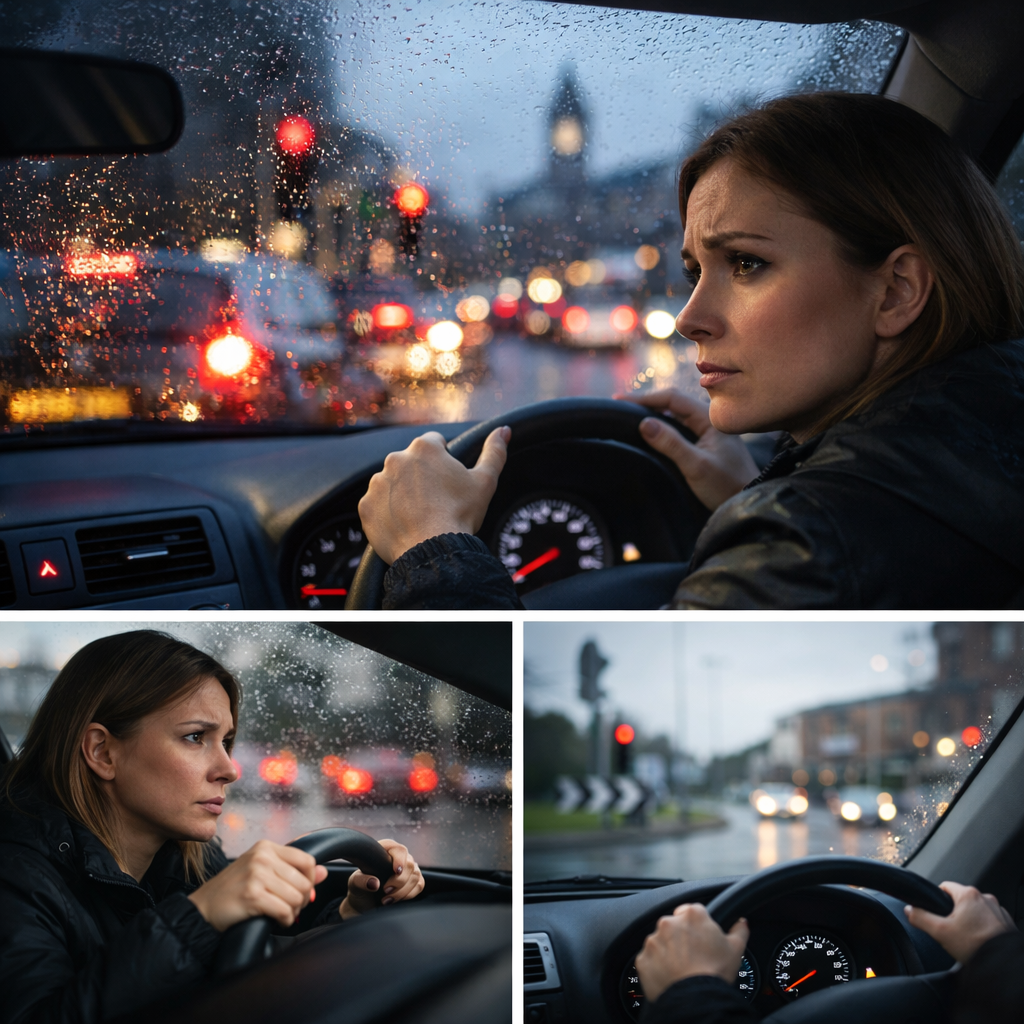
Psychological trauma can influence a person’s daily routine in many ways. Some individuals find it difficult to return to driving, especially if their accident occurred during heavy Belfast traffic or on a familiar route. Others begin avoiding certain roads or junctions associated with the incident. People may feel anxious when approaching roundabouts, merging lanes or busy motorway slip roads because these situations remind them of the accident.

Sleep disturbances are also very common. Individuals often report vivid dreams or restless nights where their mind replays the moment of impact. Lack of sleep can then contribute to irritability, fatigue and difficulty concentrating during the day. These challenges can make work, family life and ordinary tasks feel more overwhelming than usual. Many people feel frustrated that their emotions seem out of their control even though their physical injuries may be improving.


Why Psychological Trauma Happens After an RTA

A road traffic accident is a sudden and unexpected event that forces the mind and body into a heightened state of alert. The shock response is immediate and protective. Once the initial adrenaline wears off, the brain continues to process what happened. This can lead to heightened awareness, tension or ongoing fear. These emotional responses are not a sign of weakness. They are a natural part of the body’s recovery after a frightening experience.

People in Belfast and across Northern Ireland often describe feeling confused about why they are struggling emotionally when the physical injuries were relatively minor. It is important to understand that psychological trauma does not depend on the severity of the impact. Even low speed collisions can create sudden fear or panic, especially if a person felt trapped or powerless in the moment.


Roads and Conditions in Belfast That Contribute to Stress

Belfast roads can be busy and unpredictable. Congested areas such as the Westlink, Ormeau Road and the motorway network create environments where sudden braking and merging are common. These conditions can heighten anxiety after an accident, especially when drivers must return to similar traffic situations soon after the incident. Rural roads across Northern Ireland also contribute to stress because they often involve narrow bends, limited visibility and higher driving speeds. Individuals who experience trauma on rural roads may feel nervous approaching similar conditions again.

Weather conditions in Northern Ireland also play a role. Rain, frost and poor visibility increase the unpredictability of the road, and many people describe how certain weather triggers reminders of their accident. These emotional reactions are normal and shared by many others who have been involved in similar situations.


When People Choose to Speak with a Solicitor

People often choose to speak with a solicitor after experiencing psychological trauma following a road traffic accident because they want clarity and reassurance. These conversations are not about receiving legal advice. Instead, individuals want to understand what steps others usually take, what kind of evidence may be helpful and how emotional injuries are commonly addressed in personal injury claims. Many people feel more confident once they have spoken with someone who understands the common patterns of trauma after an accident and can explain how these experiences fit within the broader claims process.

At Lacey Solicitors we speak every day with individuals who are coping with emotional strain after accidents in Belfast and across Northern Ireland. Our team approaches every conversation with sensitivity and understanding, recognising that psychological trauma can be just as difficult to manage as a physical injury. You can find more information about our services on our Road Traffic Accident page.


Moving Forward After Psychological Trauma

Recovery from trauma is rarely straightforward. Some people begin to feel better within a few weeks, while others find that progress takes longer. It is normal for symptoms to fluctuate. Individuals may feel confident one day and anxious the next, especially if they encounter triggers that remind them of the accident. With time, support and patience, most people begin to regain their sense of confidence on the road and in everyday life.

Our team provides calm and compassionate guidance for individuals across Northern Ireland who are dealing with emotional and psychological effects after a road traffic accident. You can contact us through https://laceysolicitors.com/contact-us/ if you wish to discuss your situation with someone who understands the process.


Back and Spine Injuries After Road Traffic Accidents in Northern Ireland: Symptoms, Causes and What Happens Next


Back injuries are among the most common and life-disrupting consequences of road traffic accidents in Northern Ireland. Even where a collision initially appears minor, the force of impact can place sudden and unexpected pressure on the spine.

Many people in Belfast and across Northern Ireland describe how symptoms often take several days to develop. In the immediate aftermath of an accident, adrenaline and shock can mask the early signs of injury. As the body begins to settle, individuals may start to notice increasing stiffness, pain or discomfort. It is very common for people to feel confused about why their symptoms appear to worsen over time.

This is something solicitors regularly hear when individuals reach out following a road traffic accident.

Back and spine injuries can arise in a wide range of accident scenarios. Rear-end collisions are particularly associated with sudden and forceful movement of the body. T-bone impacts at junctions can twist the spine sharply, while side impacts may place uneven pressure on the back and surrounding muscles. Even low-speed collisions in slow-moving traffic can lead to lingering discomfort.

Road conditions across Northern Ireland often contribute to these types of accidents. Busy Belfast routes with stop-start traffic make rear-end collisions more common. Rural roads across NI bring different risks, including sharp bends, narrow carriageways and unpredictable surface conditions. Understanding how these injuries develop can help individuals make sense of what they are experiencing after an accident.


Common Back and Spine Injuries After Road Traffic Accidents


Back and spine injuries can vary significantly in severity.

Many individuals experience soft tissue injuries, which affect the muscles and ligaments supporting the spine. These injuries often cause stiffness, aching and difficulty moving comfortably. Some people experience a constant dull ache, while others report sharper pain when sitting, lifting or turning.

More complex injuries may involve the intervertebral discs or nerves within the spine. In these cases, individuals may experience radiating pain travelling into the arms or legs, together with tingling or numbness. While these symptoms can be concerning, they are not uncommon in road traffic accident cases and often develop gradually in the days following the collision.

Passengers are also frequently affected by back and spine injuries. Because passengers are not anticipating the impact, their bodies may move more suddenly during the collision.

Cyclists and pedestrians are particularly vulnerable. Without the protection of a vehicle structure, impacts can place significant force on the body, sometimes resulting in more severe spinal injuries.

These injuries can affect mobility, sleep, employment and everyday activities, creating both physical and emotional challenges during recovery.


The Delayed Onset of Symptoms


One of the most common experiences following a road traffic accident is delayed pain.

Many individuals initially feel relatively well immediately after the collision, only to develop stiffness or discomfort later that evening or in the days that follow. This delay is frequently caused by adrenaline, which temporarily masks pain at the time of the accident.

Once the body begins to relax, the full extent of the injury may become more noticeable.

This delayed onset of symptoms can be worrying. People often question whether the pain is temporary, whether it indicates a more serious injury, or whether it might affect their ability to work or care for their families.

These concerns are entirely normal. Many people across Northern Ireland report similar experiences following road traffic accidents. Even relatively minor injuries can feel overwhelming because they interrupt daily routines and make simple tasks more difficult.

Recognising that this experience is common can help individuals feel less isolated during recovery.


How Back and Spine Injuries Affect Daily Life


Back and spine injuries can affect almost every aspect of a person’s daily routine.

Many individuals find it uncomfortable to sit for long periods at work. Others struggle with household activities that involve bending, lifting or twisting. Driving can also become difficult, and some people avoid it altogether due to pain or anxiety.

Sleep patterns may be disrupted, and individuals can feel frustrated when recovery takes longer than expected. Pain that fluctuates from day to day can be particularly unsettling and may leave people uncertain about their progress.

Family responsibilities can add further pressure. Parents who regularly lift young children or workers whose roles involve physical activity often feel particularly concerned about how long recovery may take.

Even individuals with desk-based jobs may struggle with stiffness and discomfort throughout the working day.

These are everyday challenges that frequently arise when people speak with solicitors after road traffic accidents.


Northern Ireland Road Conditions and Their Impact on Injuries


The nature of Northern Ireland’s road network plays a role in the types of injuries commonly seen after collisions.

Belfast’s busy road network means drivers frequently encounter heavy traffic, sudden braking and merging vehicles. These conditions increase the likelihood of rear-end collisions, which often cause the jolting movement associated with back injuries.

Rural roads across NI present different risks. Narrow carriageways, tight bends and limited visibility can contribute to more serious accidents. Higher travelling speeds in rural areas may also increase the force of impact when collisions occur.

Another factor that frequently contributes to accidents across Northern Ireland is the condition of the road surface itself. Potholes, damaged carriageways and uneven road surfaces can create sudden hazards for motorists. Drivers often react instinctively when encountering these conditions, swerving or braking sharply in an attempt to avoid damage to their vehicle. These unexpected manoeuvres can increase the likelihood of collisions, particularly where other vehicles are travelling nearby.

Concerns about the increasing number of potholes on Northern Ireland’s roads have been widely reported. A recent BBC News report highlighted how deteriorating road surfaces are creating hazards for drivers across the region. When drivers suddenly change direction to avoid potholes or damaged road surfaces, the result can often lead to accidents.


Why People Speak with a Solicitor After Back and Spine Injuries


Many individuals choose to speak with a solicitor after experiencing back or spine pain following a road traffic accident.

These conversations are not necessarily about taking immediate legal action. Instead, people often want to understand what steps others in similar situations usually take, what information might be helpful to gather and how these injuries are typically approached within the claims process.

Having these discussions can help people feel informed, supported and more confident about their next steps.

At Lacey Solicitors, we regularly assist individuals across Belfast and Northern Ireland who are coping with the physical and emotional impact of back and spine injuries following road traffic accidents.

Our team takes a calm and understanding approach, ensuring individuals have the space to explain their concerns and ask questions. You can learn more about the support available on our Road Traffic Accident page.


Moving Forward After a Back or Spine Injury


Recovery from a back or spine injury often takes time.

Some individuals improve relatively quickly, while others find that progress is gradual. It is normal to feel uncertain, frustrated or anxious during this period. Recovery is not always linear, and symptoms may fluctuate from day to day.

This does not necessarily mean that the injury is worsening.

If you would like to speak with someone about your experience following a road traffic accident, you can contact Lacey Solicitors using the portal below.

Our team is here to listen and provide clear, supportive guidance based on years of experience assisting clients across Northern Ireland.


When Back or Spine Injuries Lead to a Legal Claim


Back and spine injuries following road traffic accidents sometimes lead individuals to explore whether a legal claim may arise. In Northern Ireland, claims relating to road traffic accidents typically focus on whether another road user’s negligence caused the collision and the injuries that followed.

Back injuries frequently appear in claims involving rear-end collisions, junction accidents and situations where a driver is forced to react suddenly to avoid a hazard. In some circumstances, the condition of the road surface itself may also play a role in how an accident occurred. Sudden braking, swerving or loss of control caused by potholes or damaged road surfaces can contribute to the sequence of events leading to a collision.

When people speak with a solicitor about a road traffic accident in Belfast or elsewhere in Northern Ireland, discussions often centre on understanding how the accident happened, what medical symptoms have developed and how the injury has affected day-to-day life. Medical evidence is usually an important part of this process, particularly where back or spinal symptoms develop gradually in the days or weeks after the accident.

For many individuals, the first step is simply speaking with a solicitor to understand how road traffic accident claims in Northern Ireland are typically handled and what information may be helpful to gather.

Case Study – Credit Hire success for Insurers in Ireland

Facts


The Claimant, a resident of Northern Ireland was involved in a road traffic accident with the Respondent in Co Donegal and subsequently entered into a credit agreement with an  Accident Management Company (AMC) who assisted the Plaintiff with the recovery, storage and inspection of the damaged vehicle as well as a replacement vehicle on a Credit Hire basis.

The Claimant’s motor vehicle was written off following the accident and a timely payment was made by our instructing insurers in relation to the pre-accident value (PAV) of the Claimant’s vehicle.

Hire came to an end and all invoices, to include the claim for credit hire were presented to our instructing insurers who challenged the daily rate claimed in respect of the hire vehicle.

A Claim Notice was filed and proceedings were issued in Letterkenny, Ireland.


Lacey Solicitors Insurance Lawyers are appointed


Credit hire is not a common phenomenon within Ireland, when compared to Northern Ireland, where Credit Hire is so prevalent after road traffic accidents.

Our instructing Insurers had been, until this point, spared any real experience with these claims.  Ruaidhri Austin, Partner, was appointed to Defend the matter having regard to our offices position as an ‘all-island’ Insurance Law Firm, and his status as a dual qualified solicitor with considerable credit hire experience in both NI and ROI.


Challenging the Credit Hire Rate


Our initial assessment of the claim was that it was reasonable for the claimant to hire a replacement vehicle and that the vehicle hired was like for like.  Furthermore the period of hire was reasonable having regard to all the circumstances of the case.  The daily rate for the hire vehicle however, appeared to be excessive.

We advised our Irish Insurers of the law surrounding Credit Hire in NI and the UK on the issue of Credit Hire Rates.  We advised that simply stating ‘excessive‘ or ‘economic folly’ in the absence of evidence, would not suffice.

We clarified the position in NI and the UK, namely that the burden of proof rests with the Defendant to demonstrate, by evidence (known as Basic Hire Rate evidence) that there was an alternative rate available and that there was a difference between these two rates.

If we failed to provide any evidence of any evidence of alternative daily rates in the form of Basic Hire Rate evidence, then prima facie, the Claimant would be entitled to recover the whole of the Credit Hire rate claimed.

Alternatively, we clarified, if the Plaintiff alleged, that they could not afford to have opted to use any of the high street hire vehicle providers outlined in the BHR evidence, in circumstances where they were impecunious  then they would likely recover the whole of the credit hire rate claimed.

Ruaidhrí Austin wrote appropriately to the Plaintiff’s representatives asking them whether they intended to rely on impecuniosity.  The position of course being that if they did seek to rely on impecuniosity, that they should Plead and Prove same.

Receiving no response, we instructed VeriRate (formerly Surveyorship) to prepare a Basic Hire Rate Report.

The report confirmed that;

  1. At the time of the accident;

  2. There were like for like vehicles available;

  3. In the Plaintiff’s geographical area in NI;

  4. With a cheaper daily rate.

One high street provider confirmed that their total cost of hire, for the entire period of hire, would have been half the total cost of the hire vehicle provided on a credit basis.

A Tender was made on the basis of this report at the lowest rate.

The Tender was refused and when we confirmed to the Claimant’s representatives that no increase would be made to the Tender the matter proceeded to hearing.


The Hearing


Ruaidhrí Austin attended the hearing of the action in Letterkenny Courthouse.  We secured the attendance of the author of the Basic Hire Rate report from VeriRate to give evidence.  Bearing in mind the likelihood of a court being unfamiliar with the case law from NI and the UK, our office had a number of Judgments on hand to assist the court.

The Plaintiff sought, during the course of the trial, to allege that she could not have afforded to pay ‘upfront’ any high street provider for a replacement vehicle and had ‘no choice’ but to hire a vehicle on credit terms.

We objected in the strongest terms to the Claimant seeking to rely on impecuniosity at that late stage having failed to Plead or Prove same.  We presented the court with the English case of Zurich Insurance Plc v Umerji [2014] EWCA Civ 357.  

The Plaintiff’s representatives sought to argue that impecuniosity was self proving in circumstances where the Claimant was at the time a student.  We presented the court with the NI case of Kerr v Toal [2015] NIQB 83 which confirmed that assessment of impecuniosity is a fact specific exercise and the Defendant should, prior to hearing, be afforded the opportunity to consider the Plaintiff’s financial documentation by way of Voluntary Discovery.

The Plaintiff finally sought to challenge the BHR evidence itself and the author of the report was robustly challenged on the methodology and data sources from the reports.  Arguments were made that the vehicles listed in the BHR report  were not an exact match for the Plaintiff’s own vehicle and that no evidence could be adduced that these rates would have been available at the exact time of the accident but instead could have been days or weeks later.

We presented the court with the English case of Stevens v Equity Syndicate Management Limited [2015] EWCA Civ 93 which confirmed that a court should not allow overly technical arguments and should attempt a reasonable estimate when it comes to the reports.  The replacement need be no more than in the same broad range of quality and nature as the damaged car.  Furthermore an alternative rate from even a year or so later than the accident date is still likely to throw considerable light on what the spot rate would have been at the time.


The Judgment and the Credit Hire Rate


The Judge stated that the Plaintiff’s impecuniosity would have convinced him to allow the Credit Hire rate but accepted our office’s position that impecuniosity had not been pleaded nor proven.

In the absence of an impecunious Plaintiff, the Judge accepted the evidence presented VeriRate of a BHR rate and the difference between the BHR rate and the Credit Hire rate.

The Judge found that the BHR evidence and evidence from the VeriRate representative confirmed that the Claimant failed to mitigate their losses in opting to utilise a Credit Hire Rate rather than a High Street Provider and paying ‘upfront.’

The Judge having reference to a number of rates within the BHR report awarded the lowest sum available in the BHR Report.

This resulted in a significant saving to our insurer at more than 50% of the Credit Hire invoice claimed.

The figure awarded in respect of hire by the Court failed to ‘beat’ the Tender made by our office almost one year previously.


Key Takeaways


  1. Credit Hire claims in the Republic of Ireland are a rare phenomenon but are undoubtedly on the rise.

  2. Those cases where the daily rate appears to be excessive should be challenged by way of Basic Hire Rate evidence provided that the Claimant is not relying on impecuniosity.

  3. If a Claimant is relying on impecuniosity, they should plead and prove it.

  4. Tenders remain an effective tool in the Defendant’s arsenal and any Tender should be made with the benefit of a Basic Hire Rate report.

  5. An allowance should be made for a courts unfamiliarity with these types of claims and Defendants should ensure that they have compelling arguments, supported by case law to challenge any issues that arise should the matter proceed to hearing.


This case was handled by Ruaidhrí Austin of our office.  Ruaidhrí Austin is the Head of the Credit Hire department in Lacey Solicitors and is known and respected in both NI and ROI for his knowledge and experience of Credit Hire claims across all court levels in both jurisdictions.


A Guide to Choosing the Best Solicitors in Belfast and Northern Ireland

Navigating legal issues can be challenging. Whether you need assistance with personal injury claims, insurance law, or business disputes, finding the right solicitor in Belfast is essential. Lacey Solicitors, a leading law firm in Northern Ireland, provides expert legal guidance and representation tailored to your needs.

This guide will help you understand how to choose the right Belfast solicitor, what to look for, and the specialist services offered by Lacey Solicitors.


Understanding the Legal Landscape in Belfast and Northern Ireland


Belfast is home to a number of outstanding law firms offering their own range of legal specialisms.

From family law and personal injury claims to corporate law and property transactions, it is important to choose a solicitor in Belfast with expertise in your specific area of law.

By understanding the local legal landscape, you can select a firm that is not only experienced but also highly knowledgeable about Northern Ireland law.


What to Consider When Choosing A Solicitor In Belfast


When searching for a Belfast solicitor, there are key factors to consider:

Experience and Expertise

A solicitor with experience in your specific legal area can make a significant difference. Look for firms with a proven track record in handling cases similar to yours.

Lacey Solicitors, founded in 2005 by Terence Lacey, has nearly 20 years of experience in insurance law and personal injury claims across the entire Island of Ireland.

Reputation and Reviews

Check online reviews and client testimonials to understand a firm’s reputation. Highly rated Belfast solicitors often have consistent 5-star reviews for professionalism and results. Lacey Solicitors is proud and thankful for its overwhelmingly positive client feedback on Google.  

Accessibility and Communication

Clear communication is crucial in legal matters. Choose a solicitor in Belfast who is responsive, keeps you informed, and provides guidance throughout your case.

Cost and Transparency

Legal fees can vary. Look for firms that provide clear, upfront information about pricing, potential extra costs, and flexible payment options. Transparent billing ensures there are no surprises.


Types of Legal Services Available with Lacey Solicitors Belfast


Lacey Solicitors offers a comprehensive range of services to individuals and insurance companies across Northern Ireland. Their Belfast solicitors specialise in:


Why Choose Lacey Solicitors in Belfast?


  • Nearly 20 years of experience in personal injury and insurance law

  • Highly rated Belfast solicitors with excellent client reviews

  • Comprehensive insurance and injury legal services tailored to individual and corporate clients

  • Transparent pricing and responsive communication

  • Expertise in complex claims, including catastrophic injuries and industrial disease


Contact Lacey Solicitors Belfast Today


For trusted, professional legal advice, contact Lacey Solicitors in Belfast. Speak to one of our experienced Belfast solicitors today and ensure your legal matters are handled efficiently and effectively.

Contact the team at Lacey Solicitors here to discuss your legal needs.